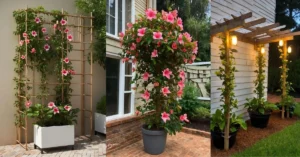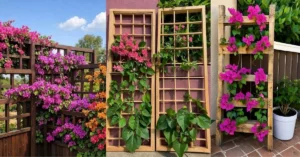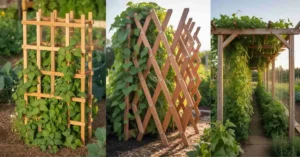
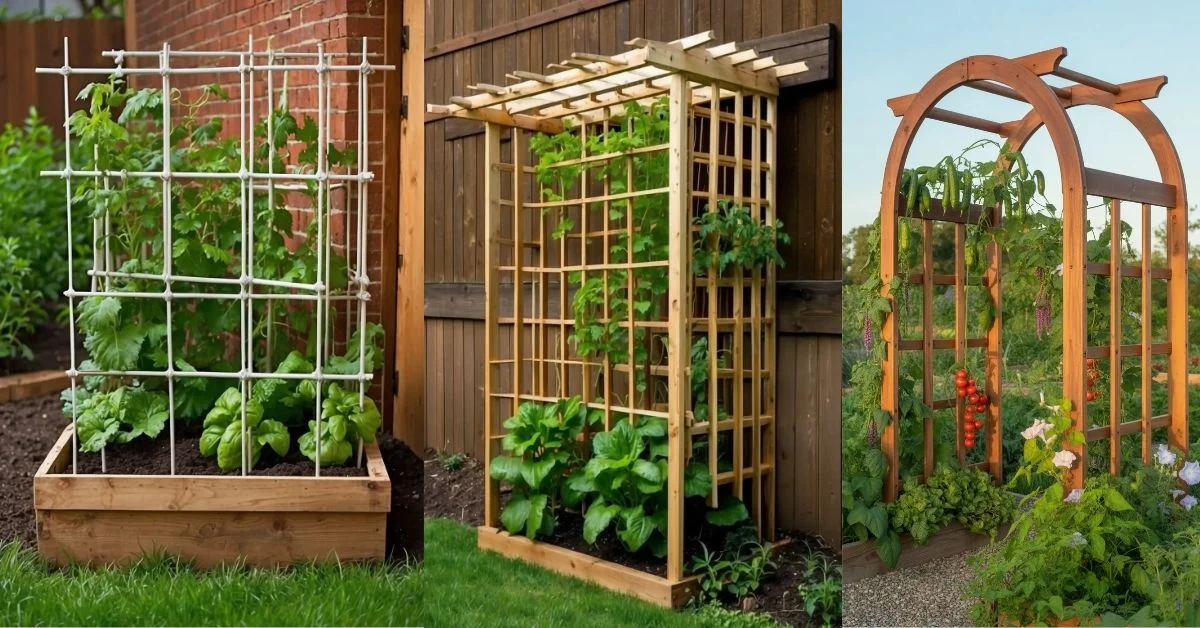
Do you want to grow more vegetables, but don’t have much space? A simple trellis can change everything.
By growing vegetables vertically, you save space, improve air circulation, and make harvesting easier.
Here are 25 creative vegetable trellis ideas that will help you grow more in any garden.
25 Creative Vegetable Trellis Ideas for Backyard Gardens
1. Classic Wooden Lattice Trellis
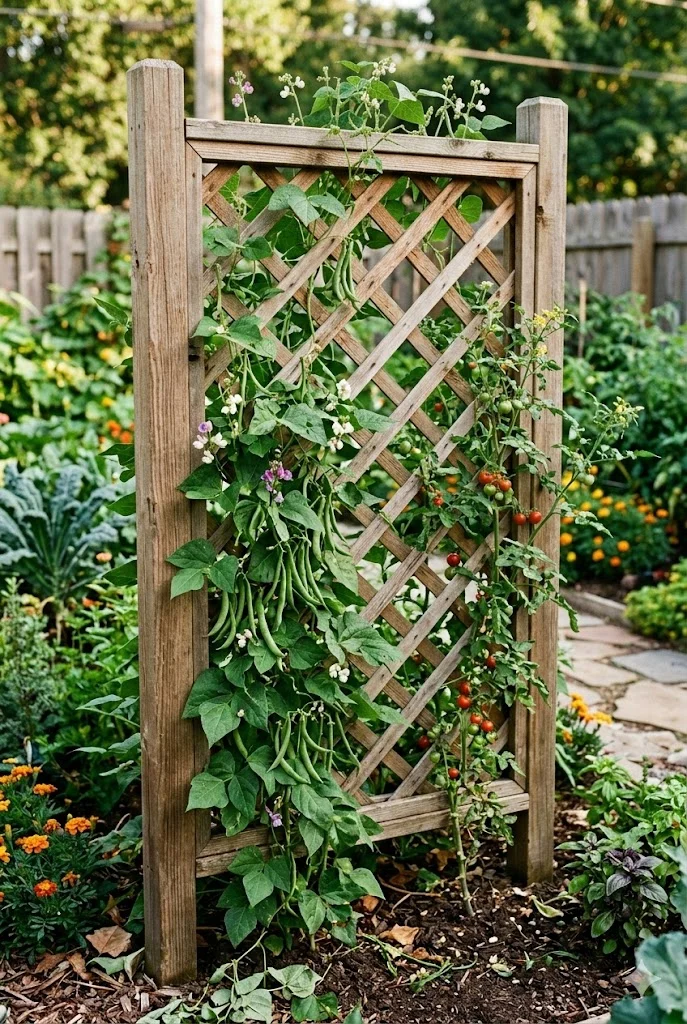
One of the most popular vegetable trellis ideas is a wooden lattice panel.
The crisscross grid provides many points where vines can attach and climb. It works perfectly for cucumbers, peas, beans, and small squash plants.
Wooden lattice panels can be attached to fences, walls, or installed in raised garden beds.
Pro Tip
Use weather-treated wood so your trellis lasts several seasons.
2. A-Frame Garden Trellis
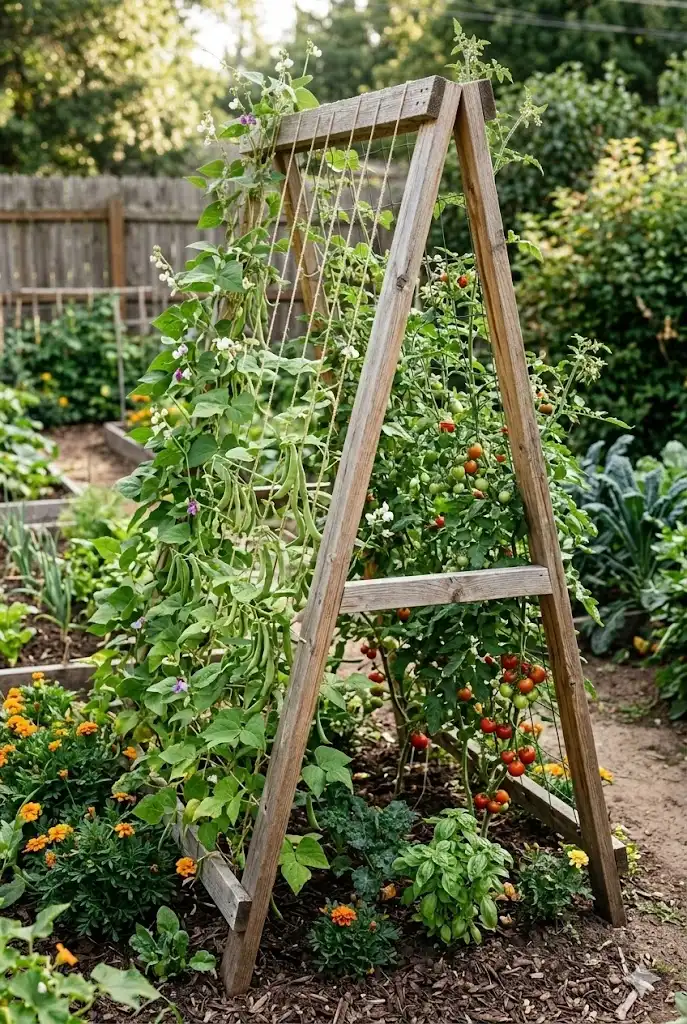
An A-frame trellis forms a triangular structure that supports plants on both sides.
Gardeners love this design because vegetables grow upward and hang down from the frame, making harvesting simple.
This structure is perfect for cucumbers, pole beans, and peas.
Pro Tip
Place the A-frame between two raised beds to maximize space.
3. Cattle Panel Arch Trellis
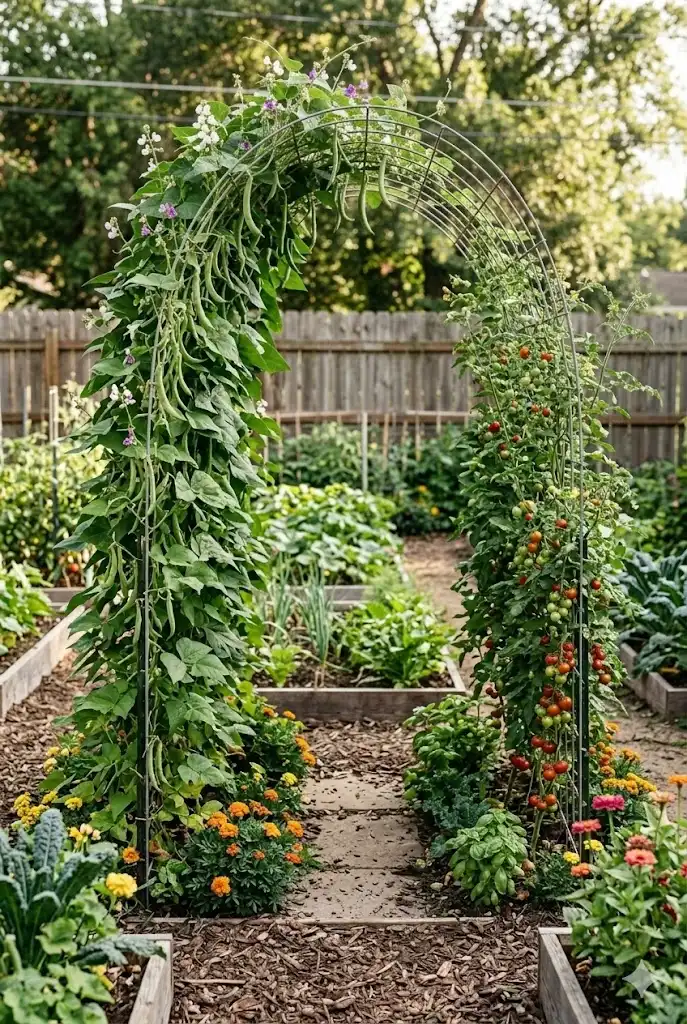
A cattle panel arch trellis creates a beautiful garden tunnel.
Metal livestock panels are bent into an arch and secured between two beds. Vegetables climb over the arch and create a lush green canopy.
This is one of the strongest vegetable trellis ideas for heavy crops like melons or squash.
Pro Tip
Plant climbing vegetables on both sides for a full arch effect.
4. Bamboo Teepee Trellis
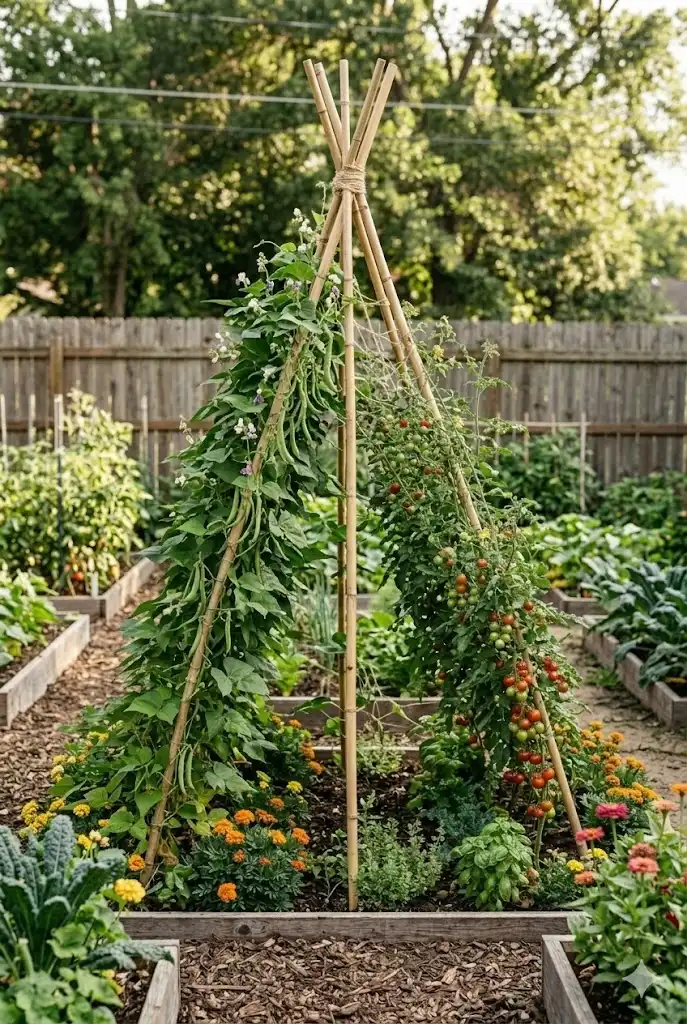
A bamboo teepee trellis is simple and inexpensive.
Several bamboo poles are tied together at the top, forming a teepee shape that climbing plants easily wrap around.
This structure works best for beans, peas, and light vegetables.
Pro Tip
Tie poles tightly using strong garden twine for stability.
5. Wall-Mounted Garden Trellis
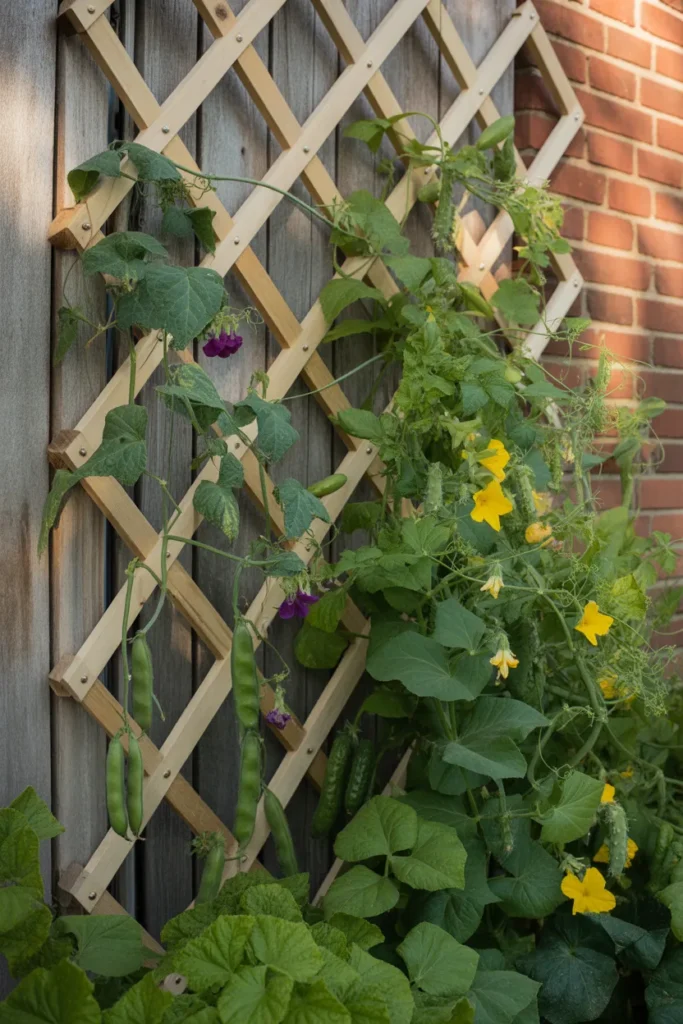
If you have a small backyard, a wall trellis is extremely useful.
A trellis panel mounted to a wall or fence lets vegetables grow vertically instead of spreading across the soil.
This is one of the best vegetable trellis ideas for compact gardens.
Pro Tip
Leave space between the wall and trellis so air can circulate.
6. Vertical String Trellis
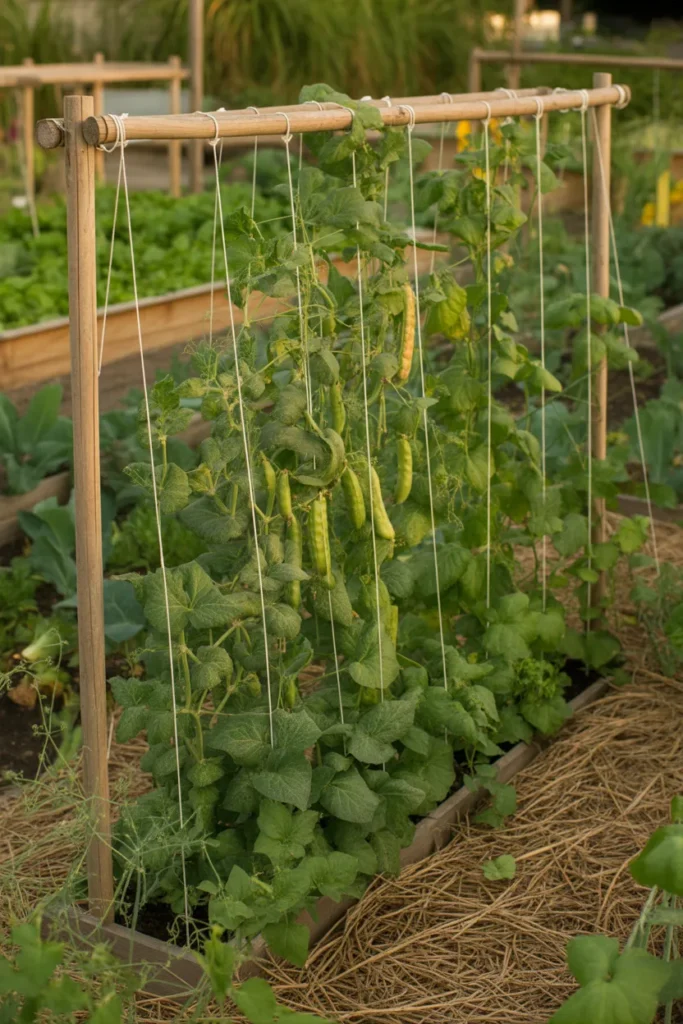
A string trellis is commonly used in greenhouse gardens.
Strong strings run from the top of a frame down to each plant. Vegetables climb the string as they grow upward.
Tomatoes, cucumbers, and beans grow very well with this method.
Pro Tip
Use thick garden twine so the strings do not snap under heavy plants.
7. PVC Pipe Trellis
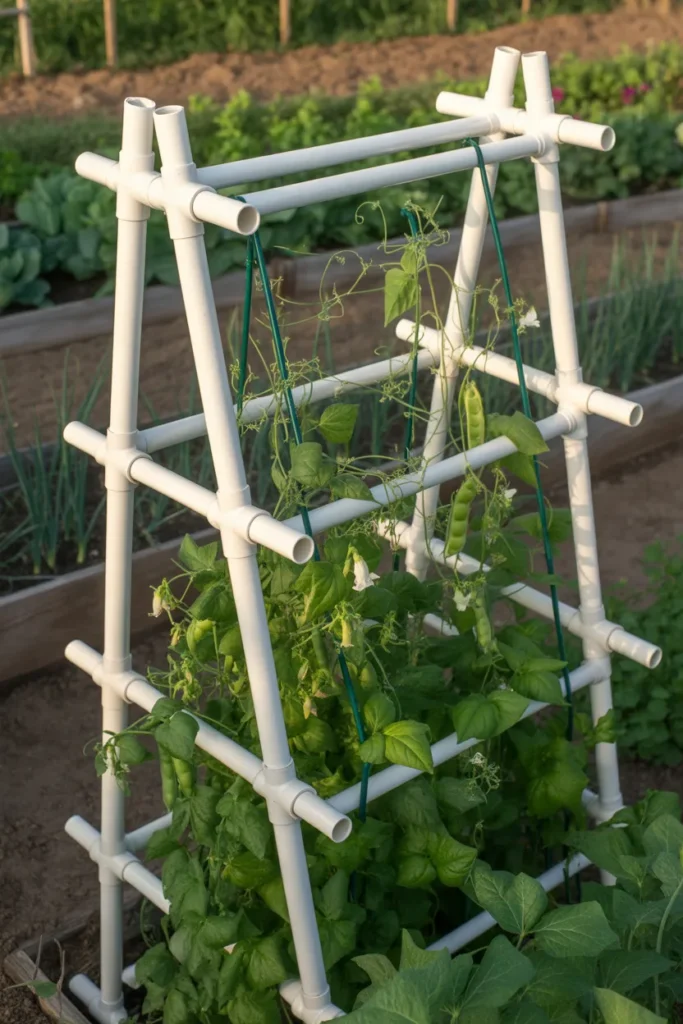
PVC pipes can be used to build lightweight and durable trellis frames.
Garden netting or wire mesh is attached to the PVC frame, creating a climbing surface for vegetables.
This option is weather-resistant and easy to move.
Pro Tip
Use plastic garden netting for better vine support.
8. Garden Obelisk Trellis
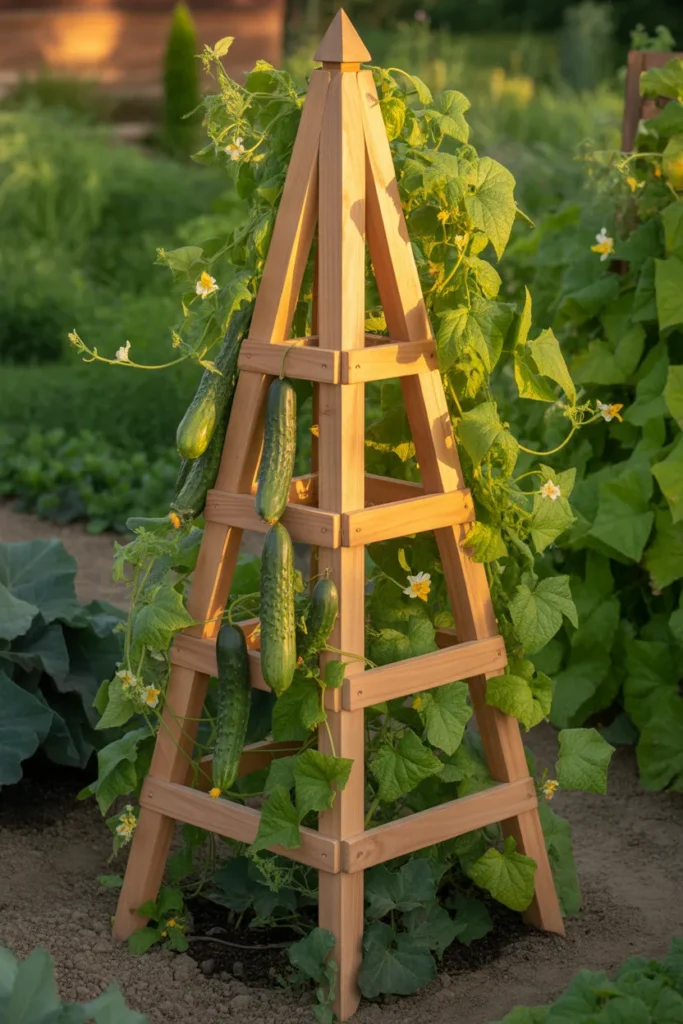
An obelisk trellis creates a tall pyramid shape that vegetables climb around.
It looks decorative while also saving space.
Pole beans, peas, and small gourds grow beautifully on obelisks.
Pro Tip
Place obelisks in the center of raised beds for visual impact.
9. Ladder Style Trellis
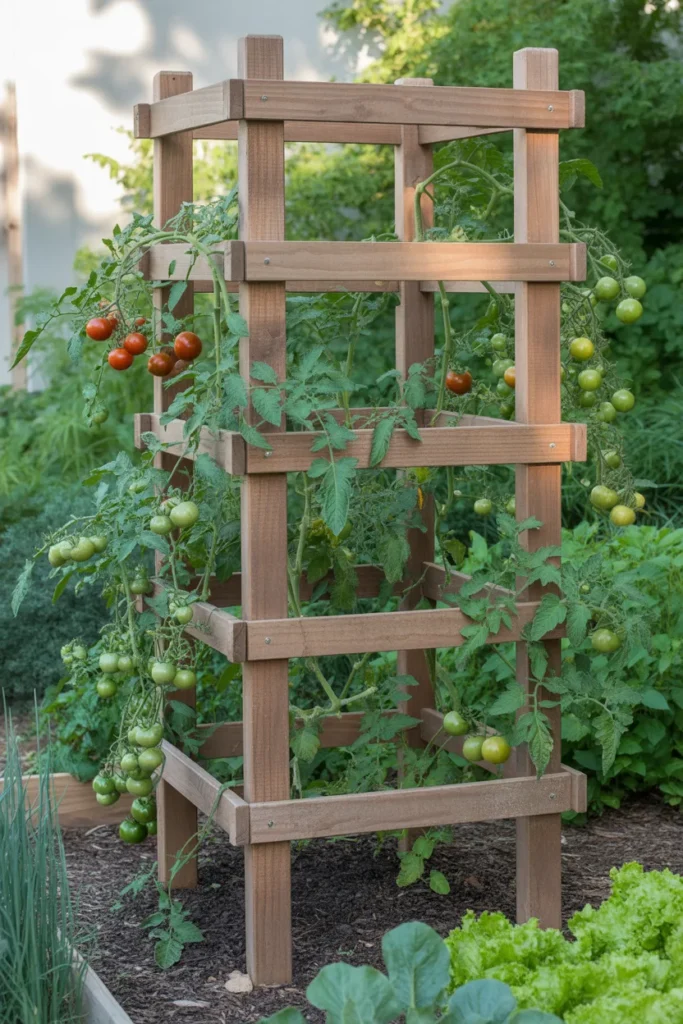
Old wooden ladders can be repurposed into creative trellises.
Plants climb through the ladder rungs naturally, creating a rustic garden look.
This is a great recycling idea.
Pro Tip
Secure the ladder firmly to prevent tipping.
10. Garden Fence Trellis
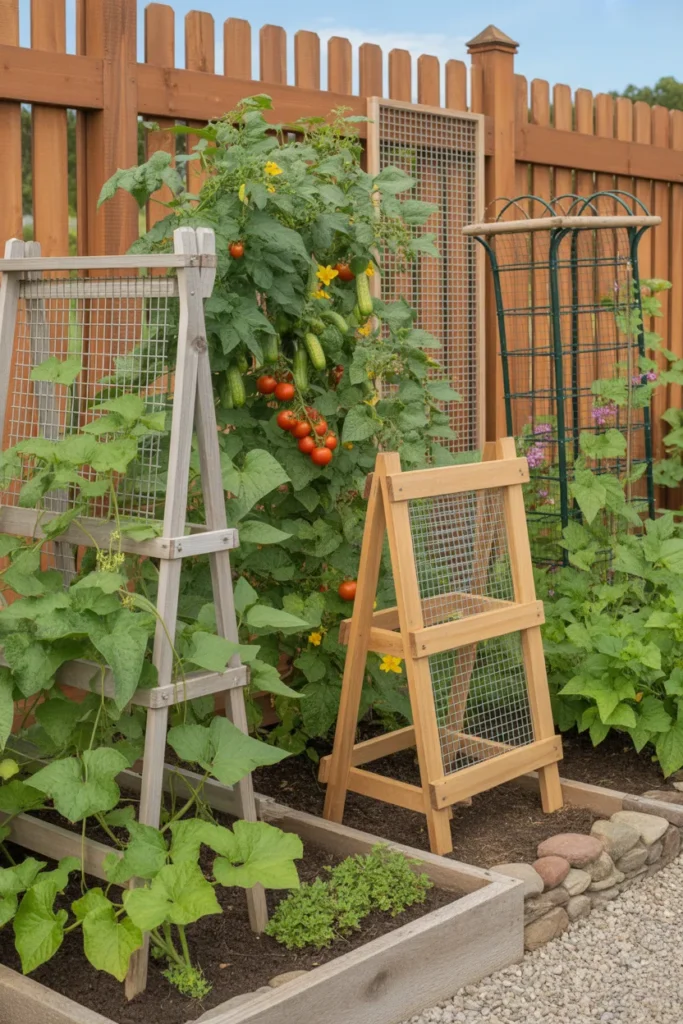
A fence can easily become a vegetable trellis.
Attach garden netting or wire mesh to the fence, then plant climbing vegetables along the base.
The plants will cover the fence with greenery as they grow.
Pro Tip
Guide young vines toward the fence early in the season.
11. Raised Bed Trellis Frame
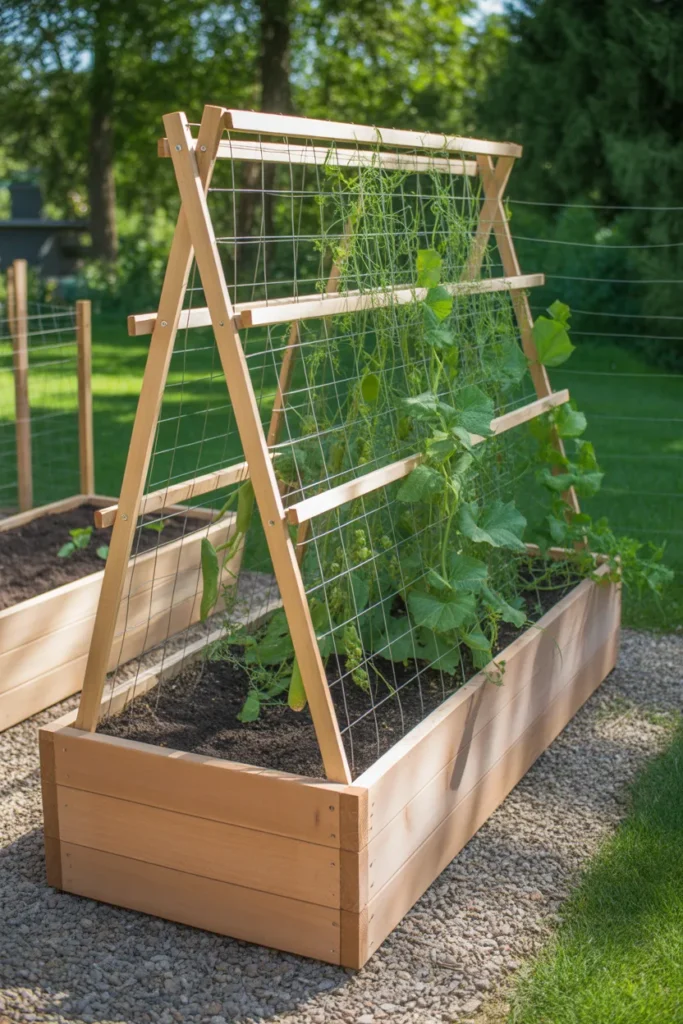
Raised beds can include built-in trellis frames.
Wooden posts are attached to the corners of the bed with wire mesh stretched between them.
This keeps the garden organized and productive.
12. Netting Trellis System
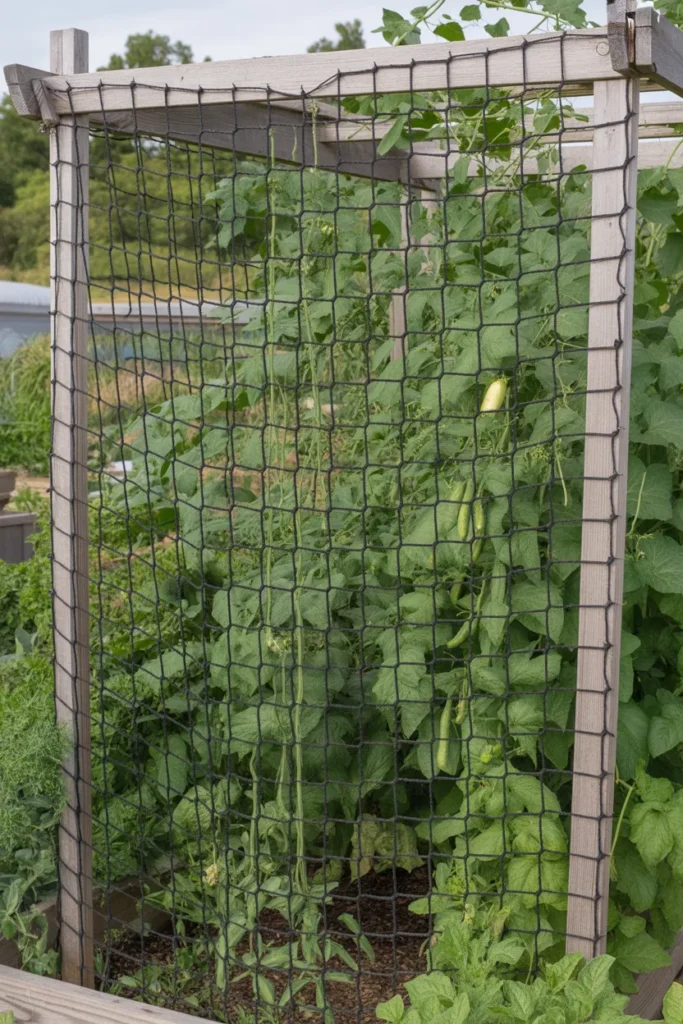
Garden netting stretched between wooden stakes creates a lightweight climbing structure.
Peas and beans easily grab onto the netting.
13. Tomato Cage Trellis
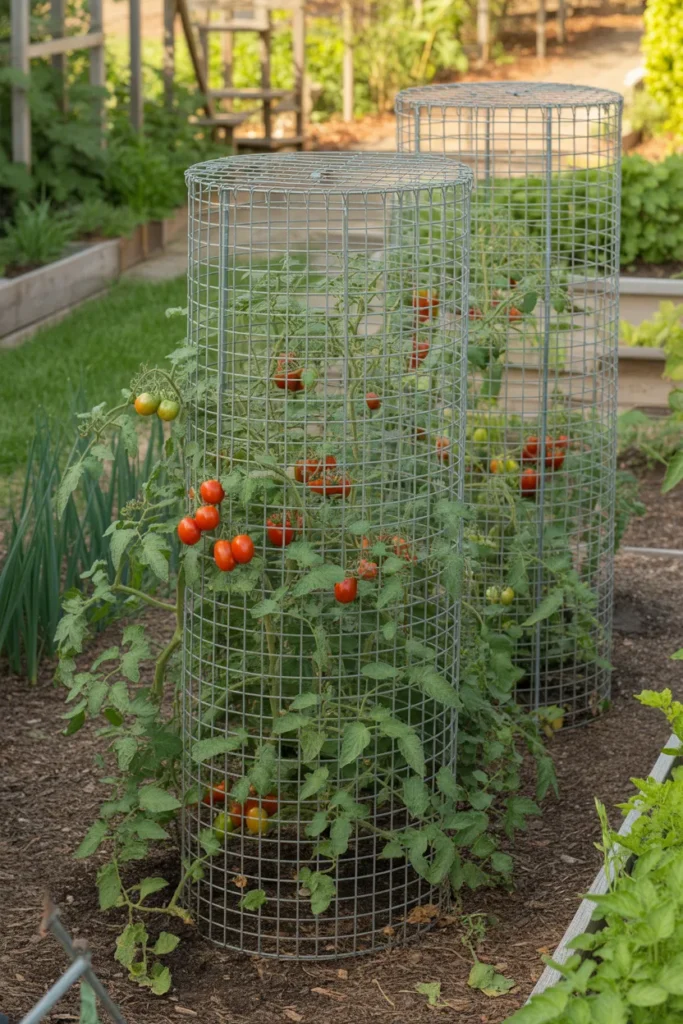
Tomato cages are not limited to tomatoes.
They can support peppers, peas, cucumbers, and other climbing vegetables.
14. Garden Arch Trellis
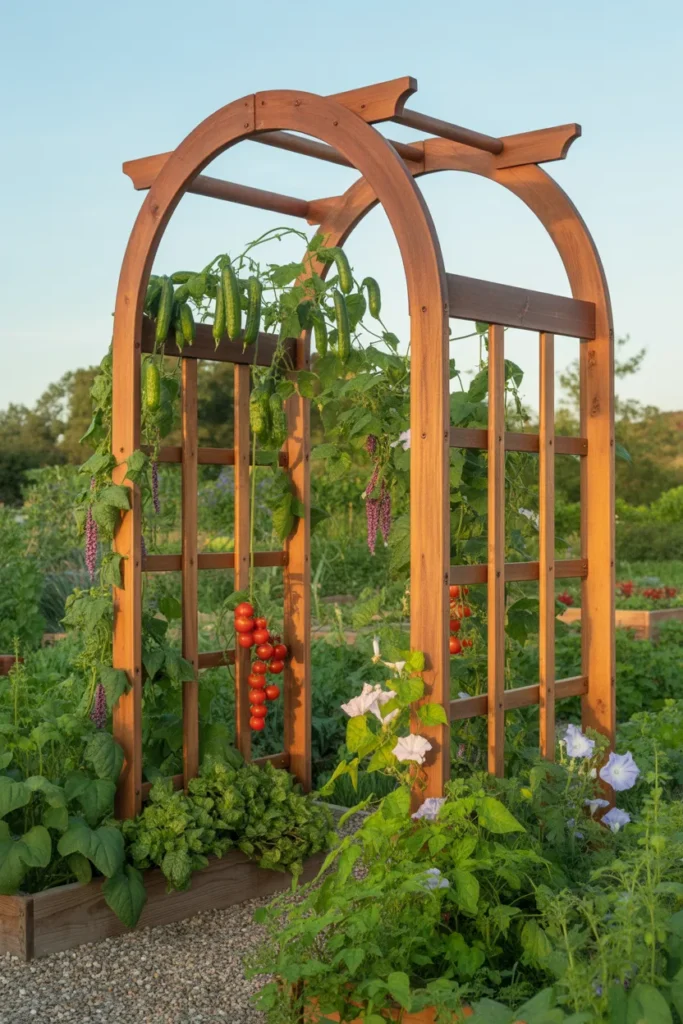
A garden arch adds beauty while supporting climbing vegetables.
Plants grow over the arch to form a tunnel of greenery.
Must read: 20 Green Bean Trellis Ideas for Bigger Harvests in Small Spaces
15. Wooden Frame Trellis
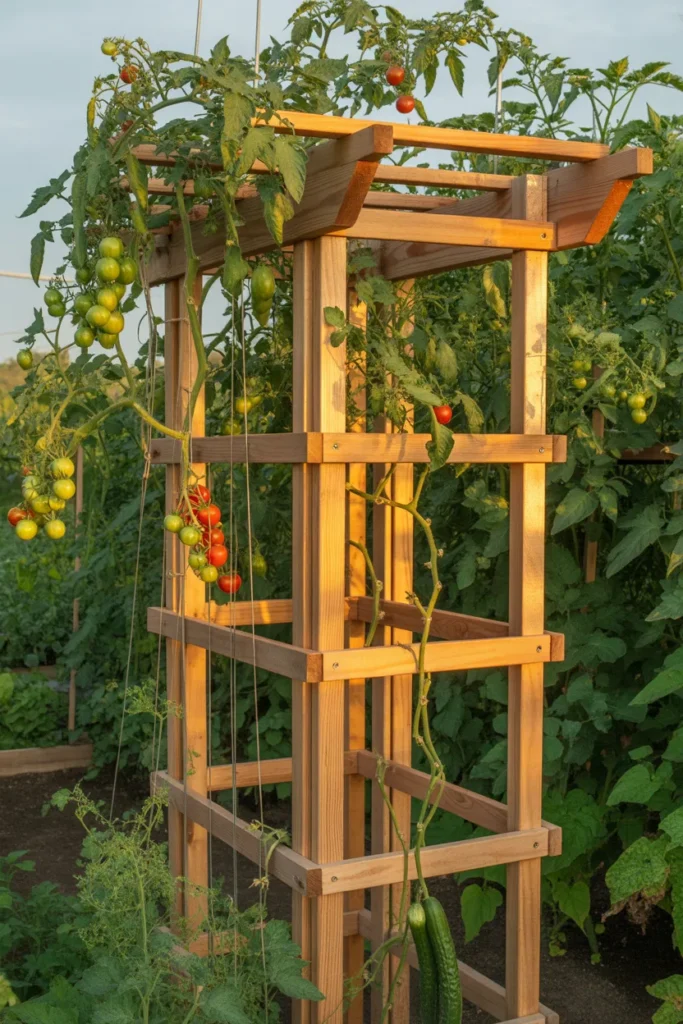
A simple rectangular wooden frame with wire mesh works well for many climbing vegetables.
This is one of the easiest DIY trellis projects.
16. Pallet Trellis
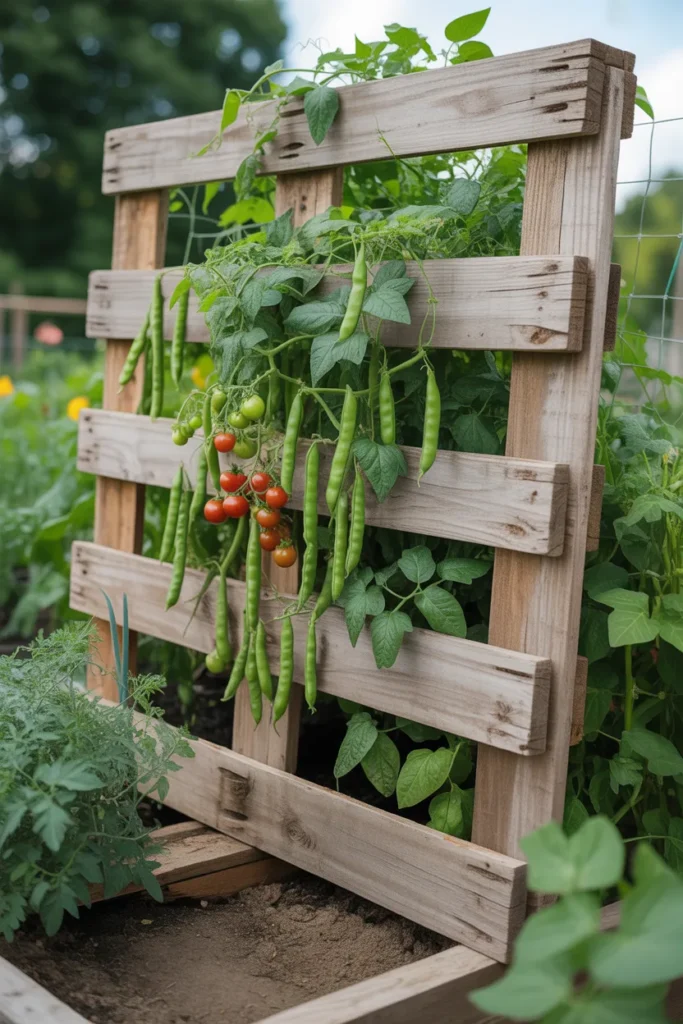
Wooden pallets can be turned into vertical garden supports.
They provide many small gaps where plants can climb.
17. Pergola Style Trellis
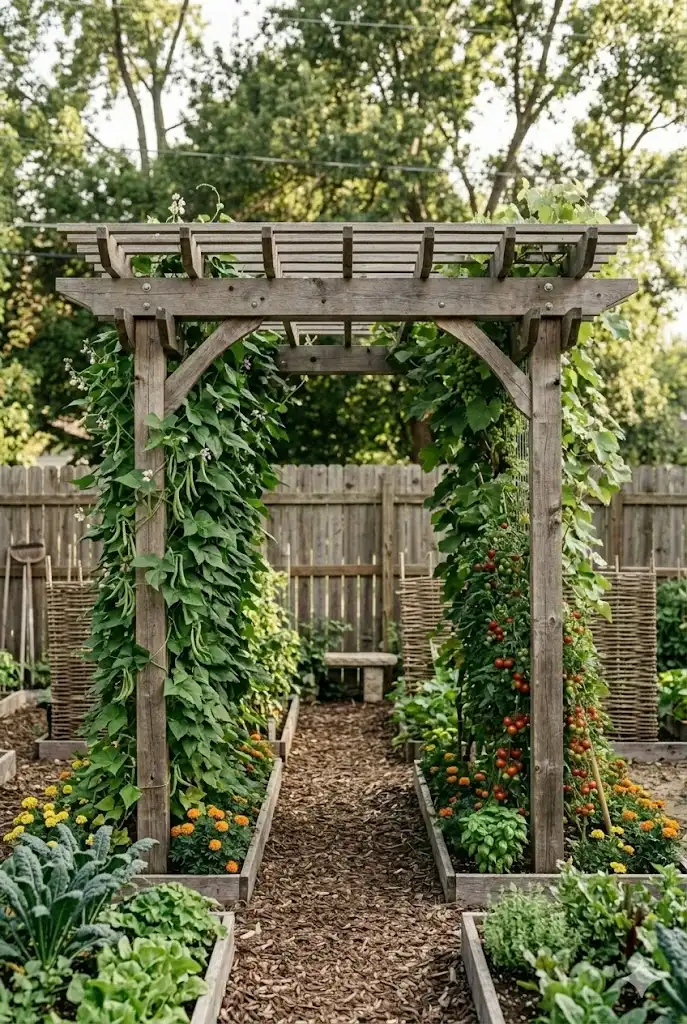
Pergolas can double as large garden trellises.
Climbing vegetables grow along the beams and create natural shade.
18. Wire Panel Trellis
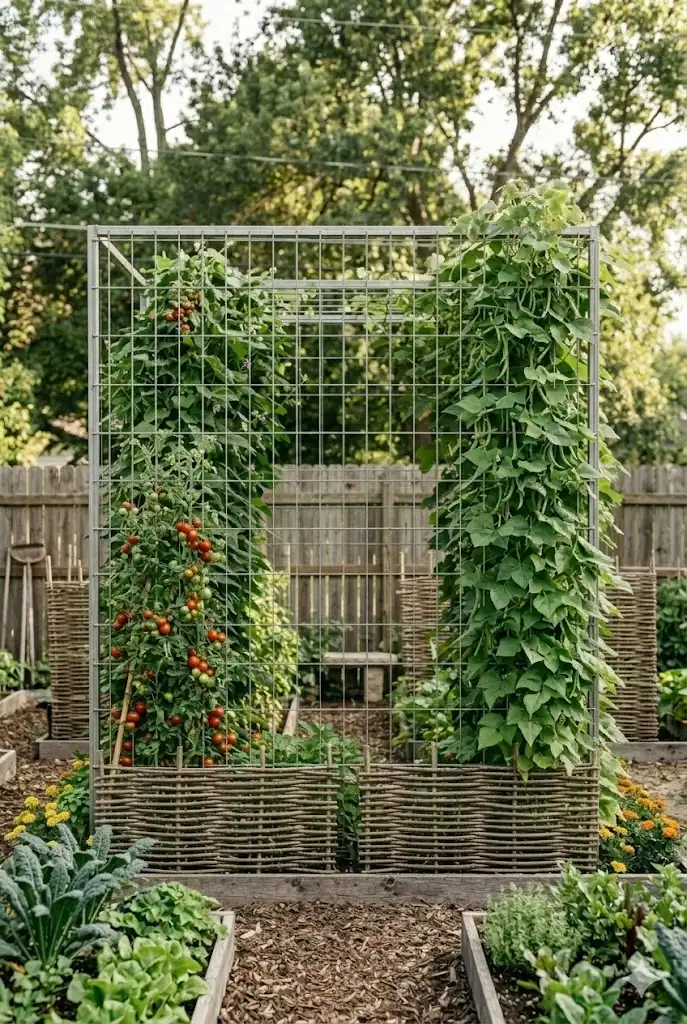
Wire panels are strong and durable.
They are perfect for heavy vegetables such as squash and melons.
19. Garden Grid Trellis
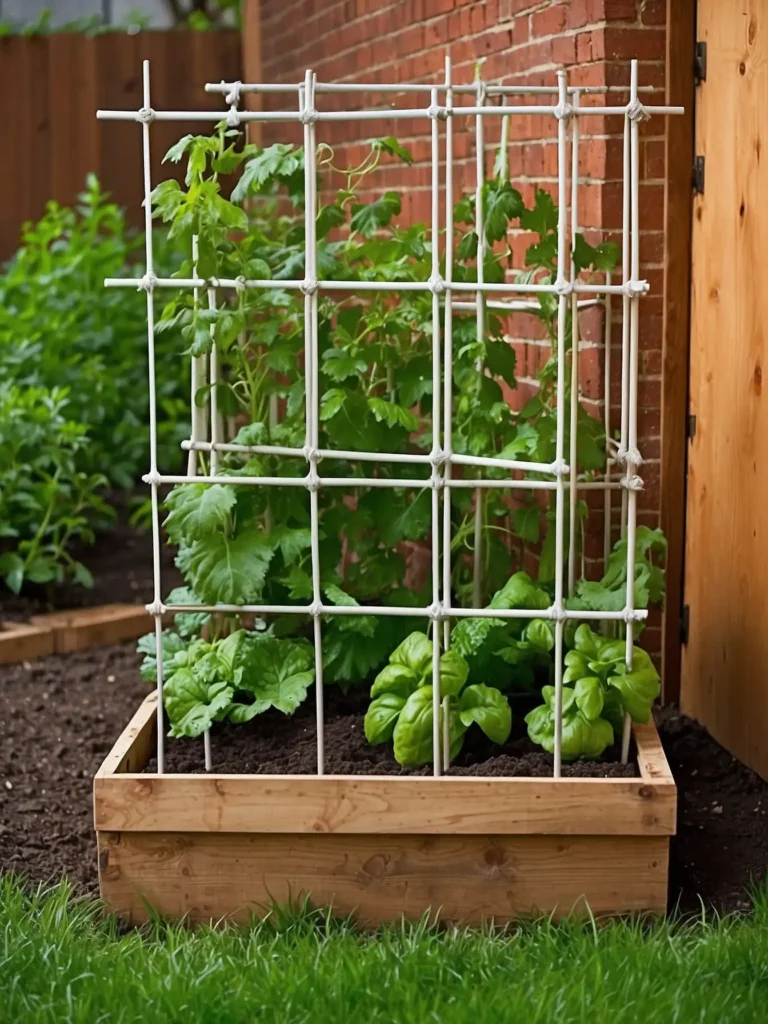
Square metal grids help guide plant growth evenly.
This keeps vines organized and prevents overcrowding.
20. Rope Trellis
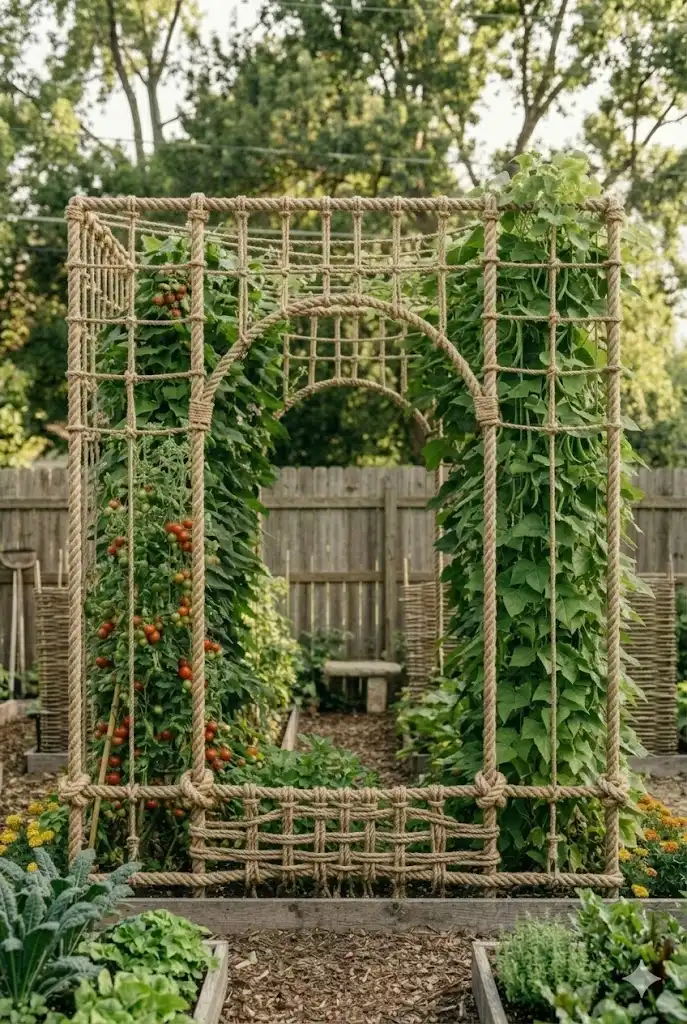
Rope trellises create a flexible climbing network.
Plants weave naturally around the ropes.
21. T-Post Trellis
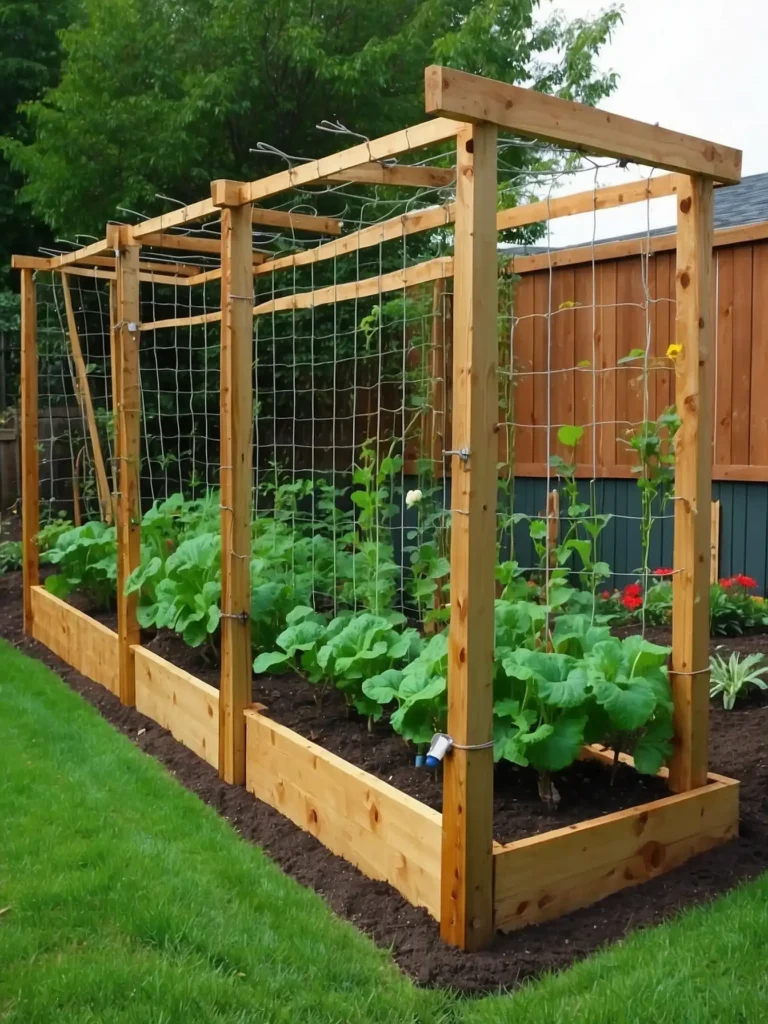
Metal T-posts with wire mesh create a strong vertical support system.
This design is commonly used in larger gardens.
22. Folding Trellis
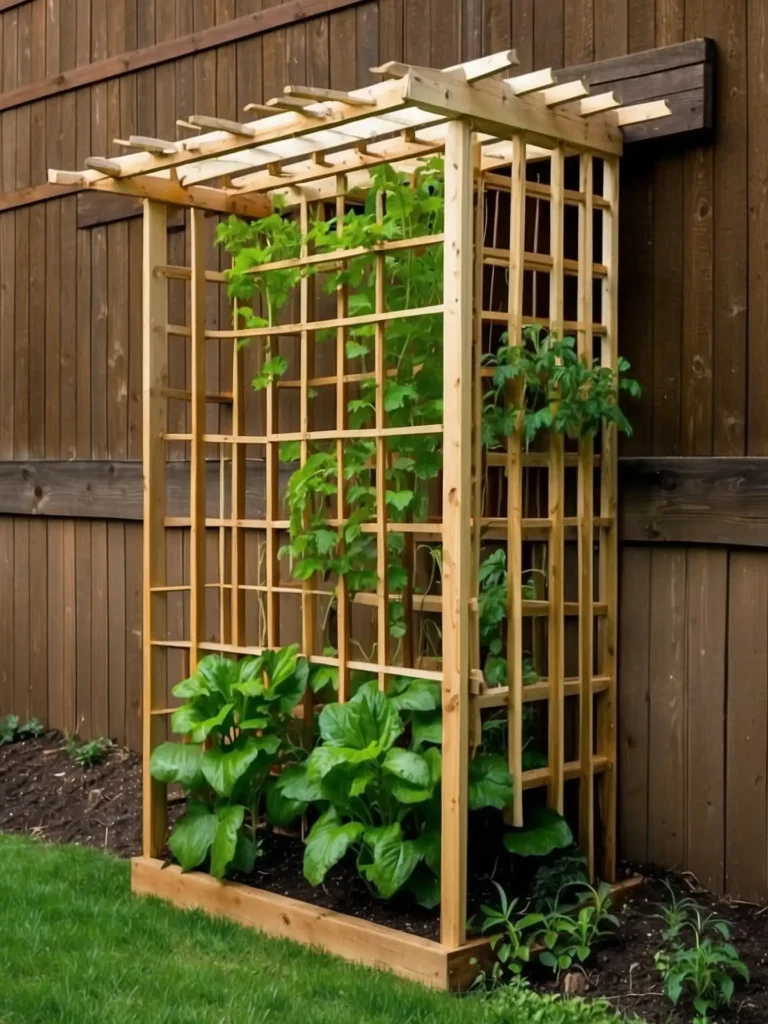
Folding trellises are movable and perfect for seasonal gardening.
They can be stored easily during winter.
23. Garden Arbor Trellis
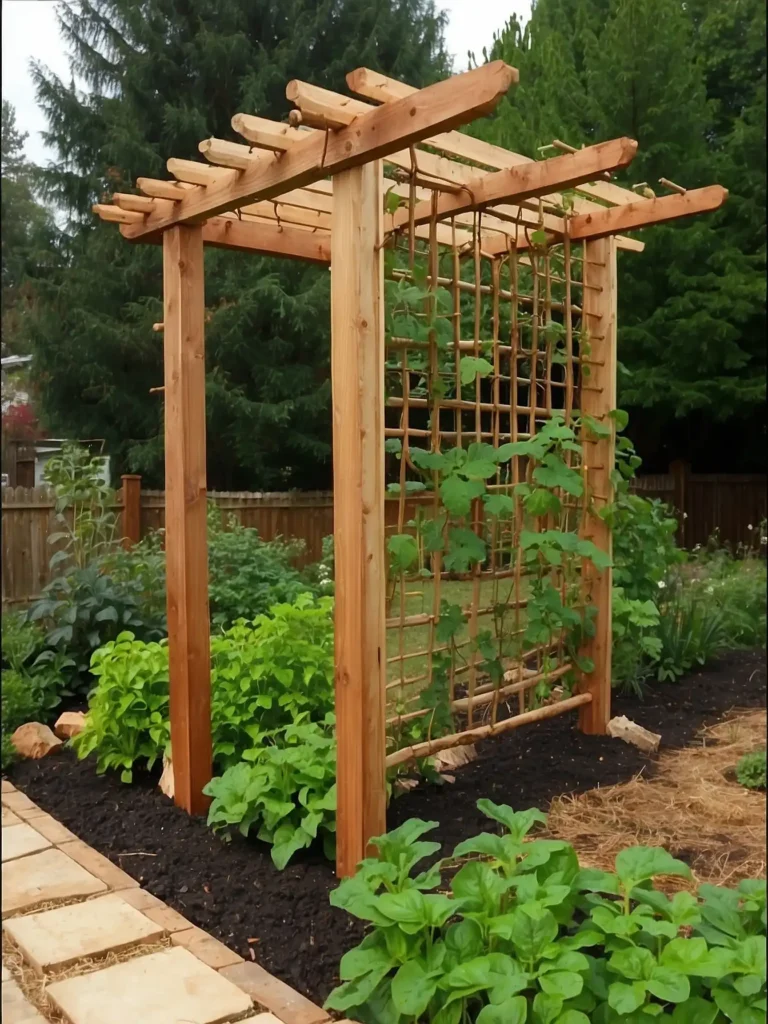
Arbors create a decorative entrance to the garden while supporting climbing vegetables.
24. Spiral Metal Trellis
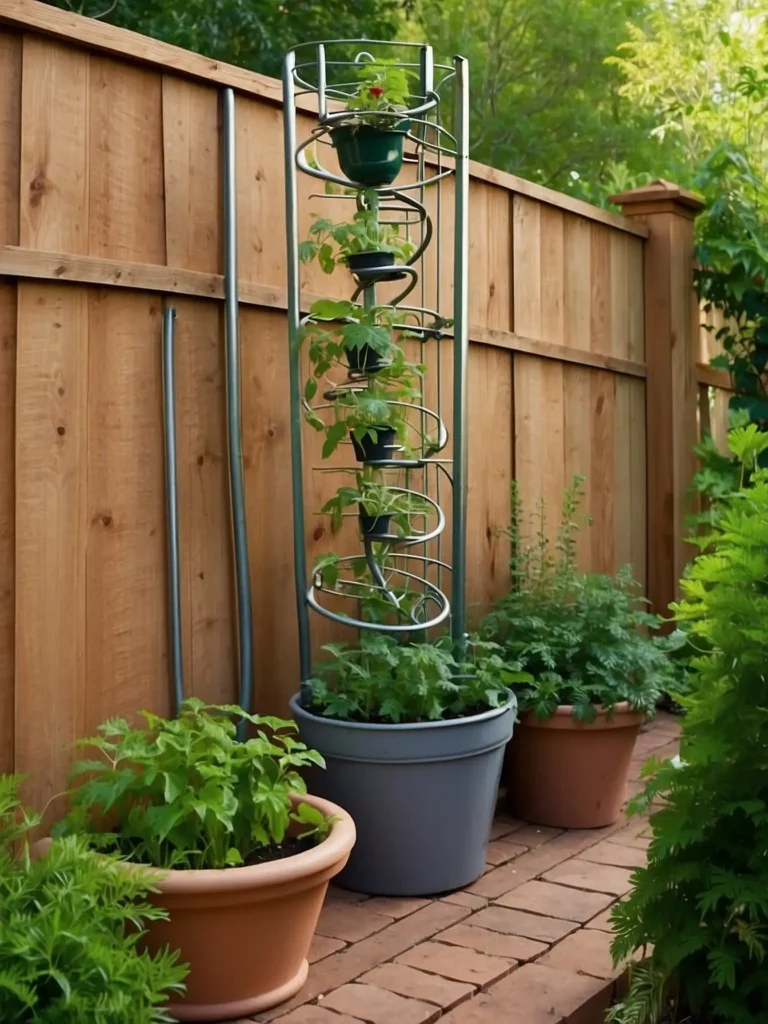
Spiral metal trellises guide vines upward in a twisting shape.
They work well in container gardens.
25. DIY Wooden Arch Trellis
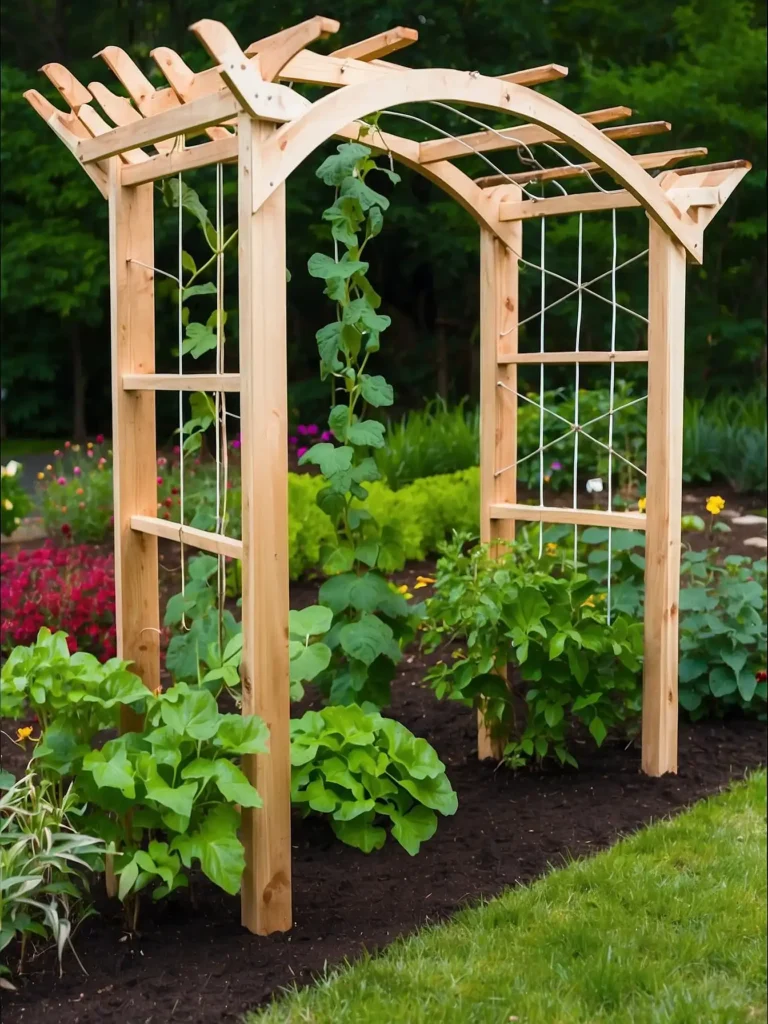
A wooden arch trellis creates a beautiful walkway covered with vegetables and vines.
This design combines productivity with garden aesthetics.
Must read: 10 Smart Tomato Trellis Ideas to Grow More Tomatoes in Small Spaces
How to Choose the Best Vegetable Trellis
| Garden Type | Best Trellis |
|---|---|
| Small backyard | Wall trellis |
| Raised beds | A-frame trellis |
| Large gardens | Arch trellis |
| Container gardens | Obelisk trellis |
| Heavy vegetables | Cattle panel trellis |
Best Vegetables for Trellis Gardening
Climbing vegetables grow best with support structures.
Popular trellis vegetables include:
• cucumbers
• pole beans
• peas
• tomatoes
• squash
• gourds
• melons
These crops benefit greatly from vertical growing systems.
Maintenance Tips for Trellised Vegetables
To keep your garden productive:
• guide young vines toward the trellis early
• tie plants loosely with garden ties
• prune excess leaves for airflow
• check trellis stability during strong winds
Healthy trellis systems produce bigger harvests and healthier plants.
The Bottom Line
Using vegetable trellis ideas is one of the easiest ways to grow more food in a small garden. Vertical gardening improves plant health, saves space, and makes harvesting much easier.
From simple bamboo teepees to large arch trellises, there are many ways to support climbing vegetables. By choosing the right trellis design, you can transform your garden into a productive and beautiful growing space.
FAQs
What vegetables grow best on a trellis?
Many climbing vegetables grow better with support structures. Popular trellis vegetables include cucumbers, pole beans, peas, tomatoes, squash, gourds, and melons. Growing these plants vertically improves airflow and reduces pest problems.
What is the easiest vegetable trellis to build?
A simple A-frame trellis or bamboo teepee trellis is one of the easiest options. These structures require minimal materials and can be built in less than an hour.
How tall should a vegetable trellis be?
Most vegetable trellises should be between 5 and 7 feet tall. This gives climbing vegetables enough room to grow while still allowing easy harvesting.
Can tomatoes grow on a trellis?
Yes, tomatoes grow very well on trellises. Vertical support keeps fruits off the ground, improves air circulation, and helps prevent diseases.
Is trellising better than growing vegetables on the ground?
Trellising offers several advantages. It saves garden space, reduces plant diseases, improves sunlight exposure, and makes harvesting easier.