Love gardening but short on space? A DIY garden trellis is an easy way to grow climbing vegetables like beans, cucumbers, and tomatoes. Vertical gardening keeps plants organized, improves airflow, and makes harvesting much easier.
In this guide, discover 25 DIY garden trellis ideas—from simple string supports to decorative arches—that are perfect for backyards and raised beds.
For more inspiration and ideas for all climbing vegetables, check out our vegetable trellis ideas.
25 DIY Garden Trellis Ideas
1. Bamboo Teepee Trellis
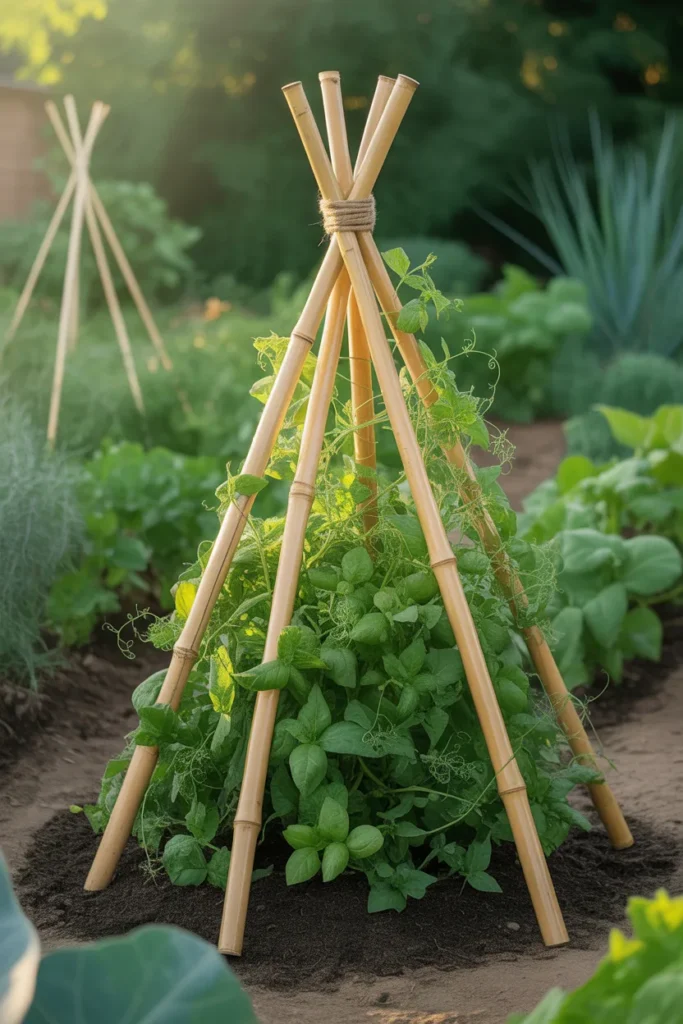
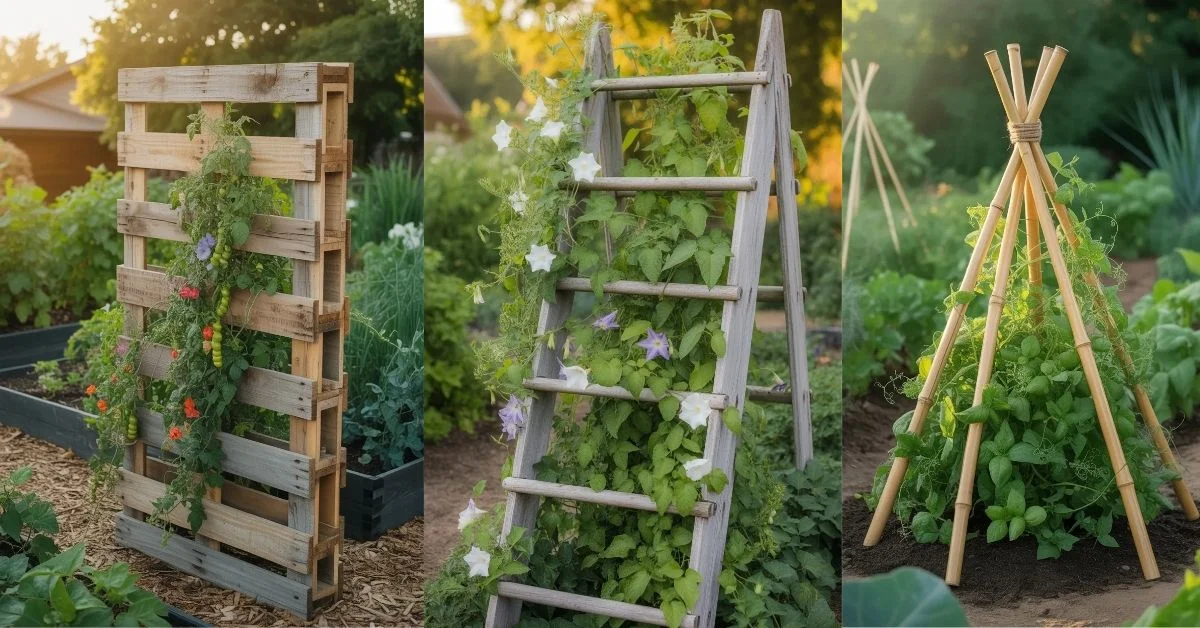
Bamboo poles tied together in a teepee shape create a natural and attractive support for beans, cucumbers, and peas. This classic design is simple, lightweight, and easy to set up.
Pro Tip: Space the poles 2–3 feet apart for maximum airflow and healthy growth.
Works beautifully alongside bean trellis ideas for companion planting.
2. Ladder Trellis
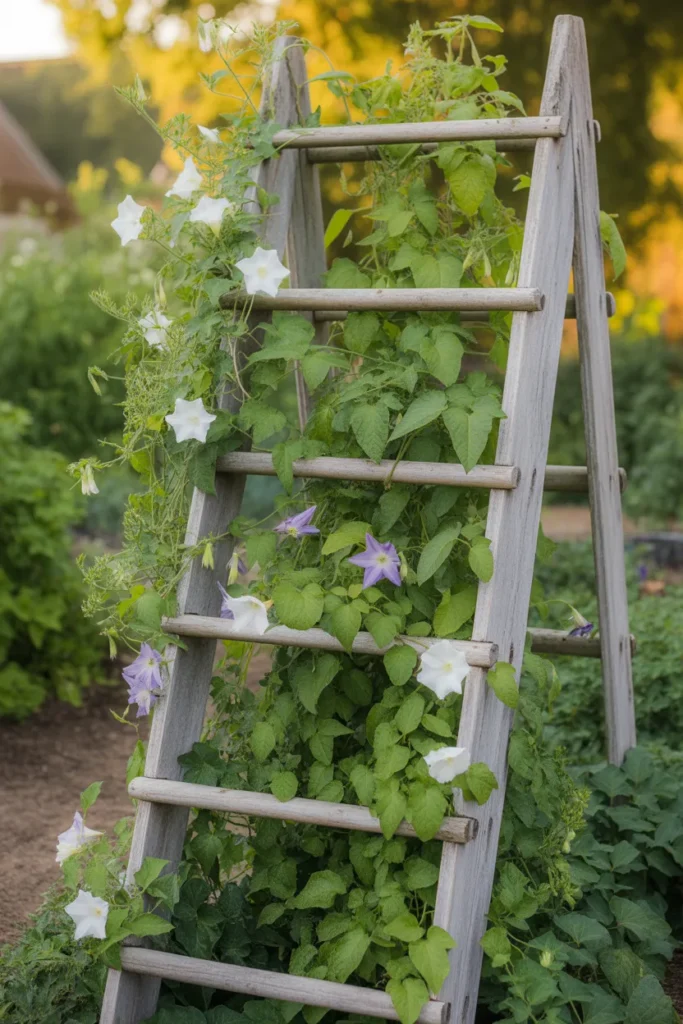
Repurpose an old ladder into a climbing frame for your vegetables. Vines will naturally wrap around the rungs, creating a rustic, functional trellis.
Pro Tip: Anchor the ladder securely into the soil to prevent tipping during windy days.
3. Wall-Mounted Net Trellis
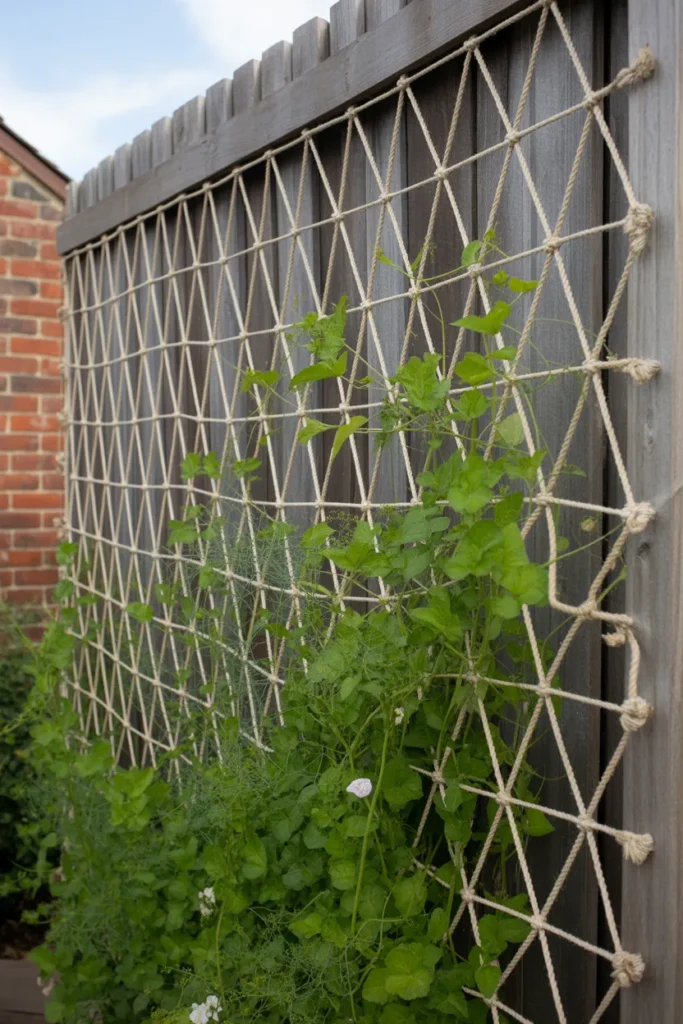
Use netting or lattice attached to a wall or fence. Ideal for small gardens, patios, or urban spaces, this trellis helps save floor space while keeping plants healthy.
Pro Tip: Leave a small gap between the wall and netting to allow airflow and reduce disease risk.
4. String Grid Trellis
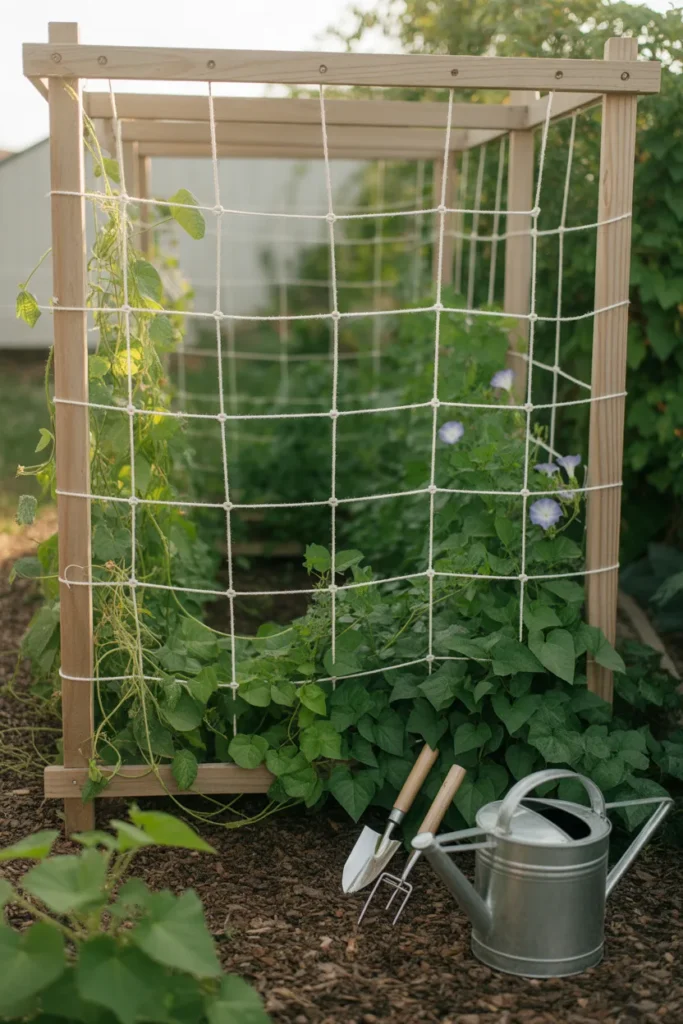
Create a simple grid using twine or string tied between wooden stakes. Vines climb naturally and stay organized.
Pro Tip: Use soft garden twine to prevent damaging young shoots.
5. Obelisk Trellis
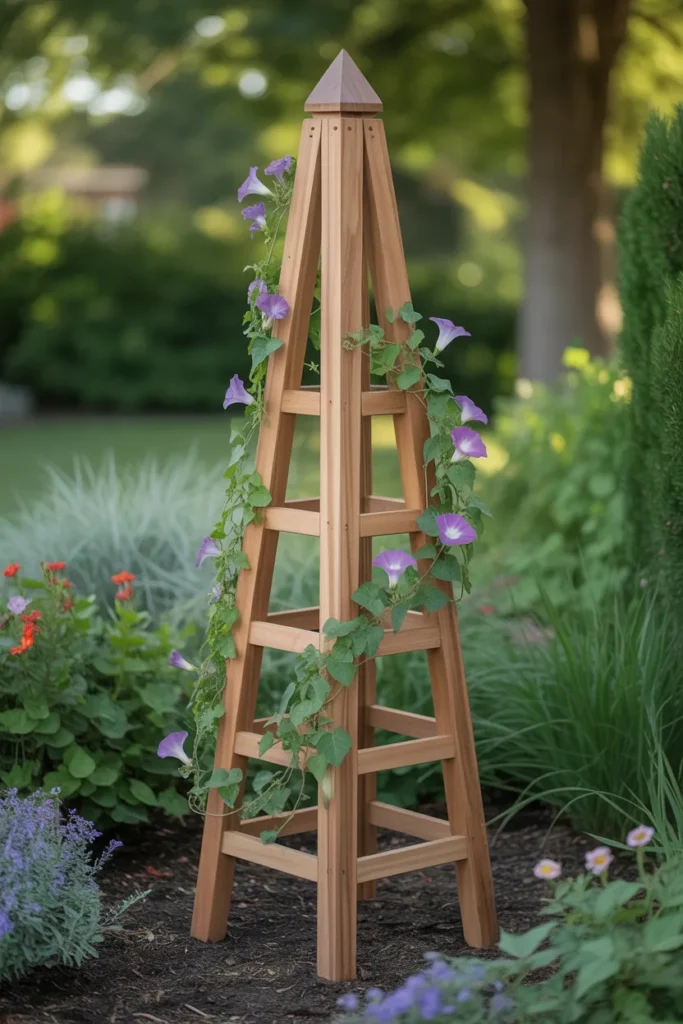
A pyramid-shaped obelisk adds both height and charm to your garden. Beans, peas, and cucumbers can climb it easily.
6. PVC Pipe Trellis
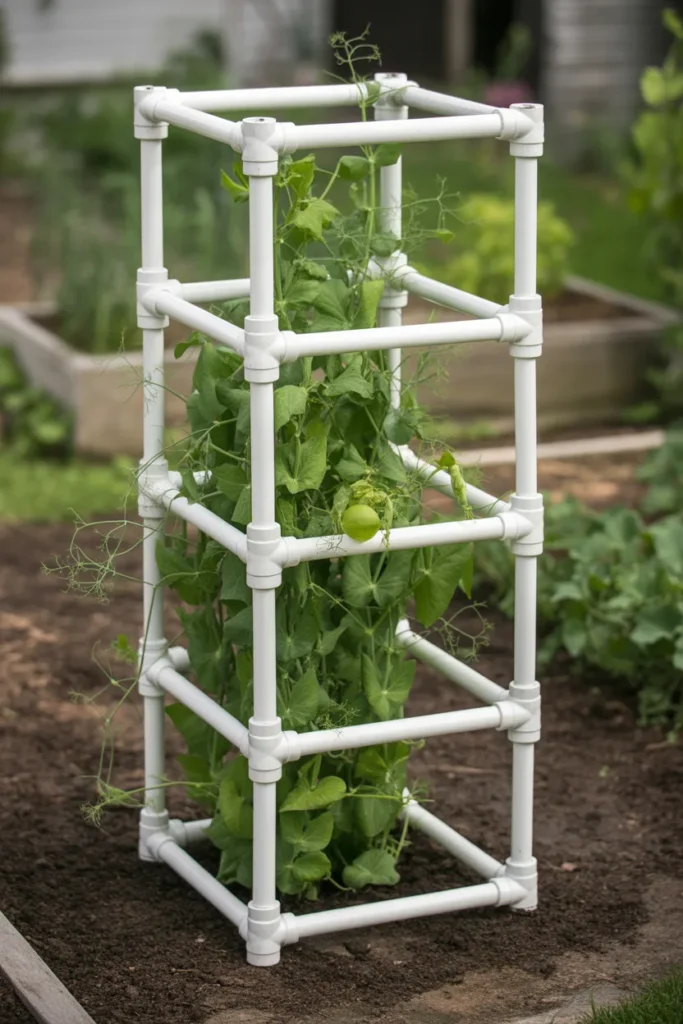
Lightweight, durable, and affordable, PVC pipes can be combined with string or netting to support climbing vegetables.
7. Folding Trellis
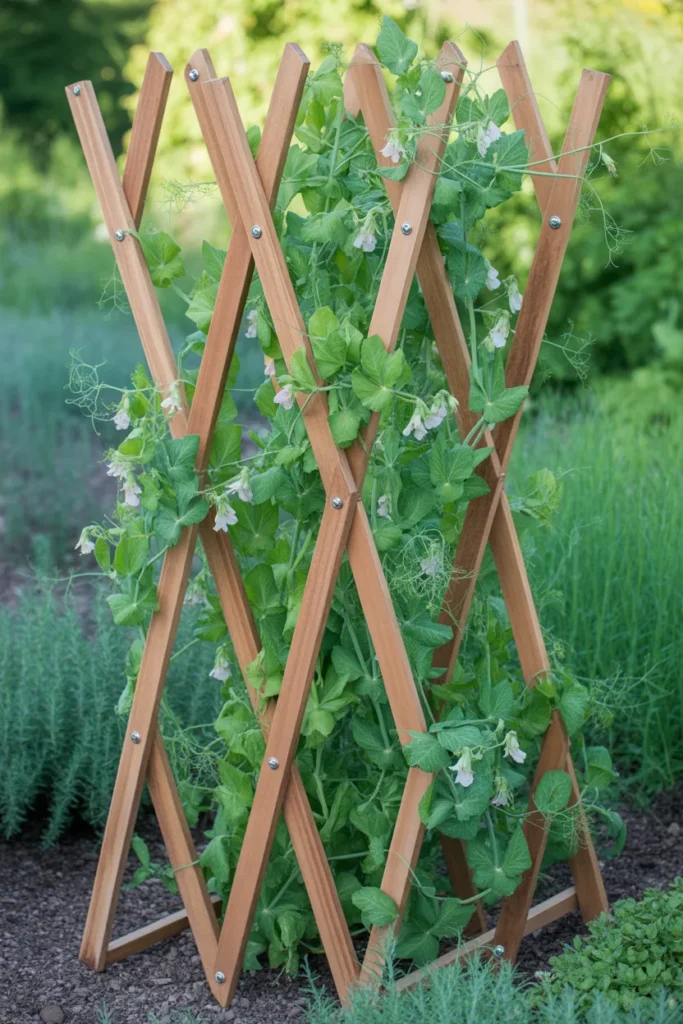
Perfect for small spaces, folding trellises are movable and can be stored during off-seasons.
Pro Tip: Place near the sunniest part of your garden for maximum growth.
8. Garden Arch Trellis
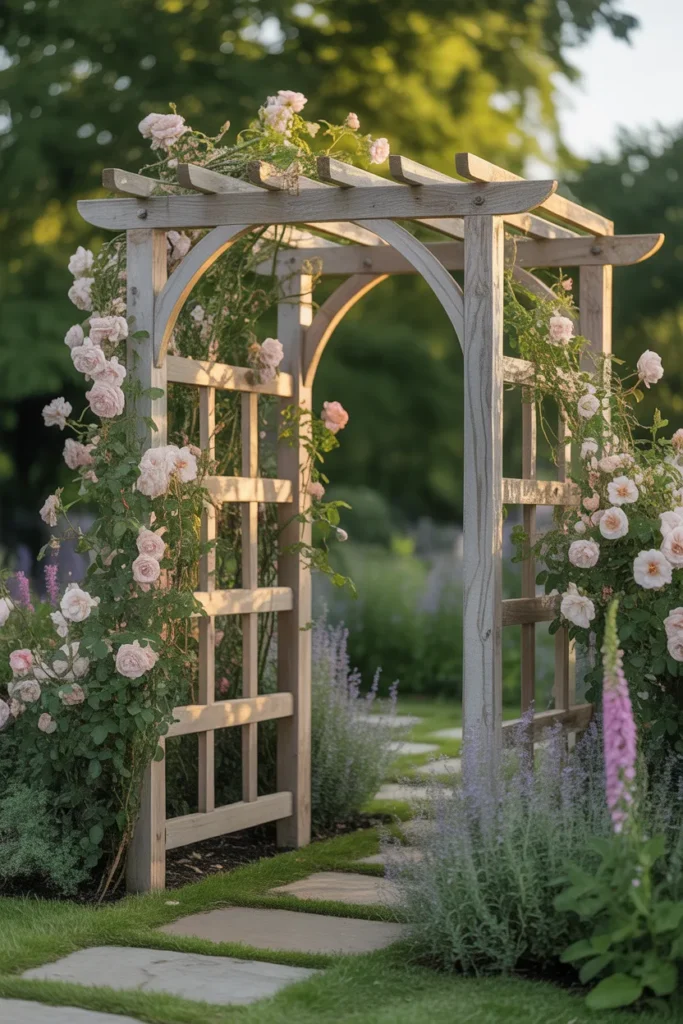
Create a decorative arch and plant climbing vegetables on either side. Over time, your garden can become a leafy tunnel.
9. Pallet Trellis
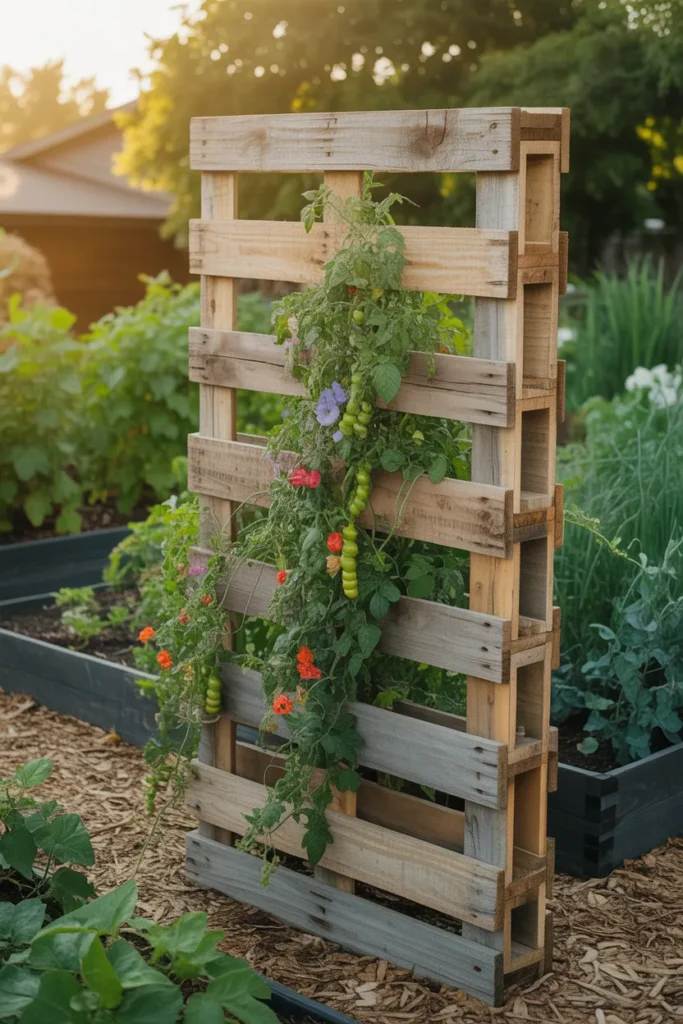
Turn a wooden pallet on its side for an easy vertical support system. Ideal for small gardens or raised beds.
10. Vertical Rope Trellis
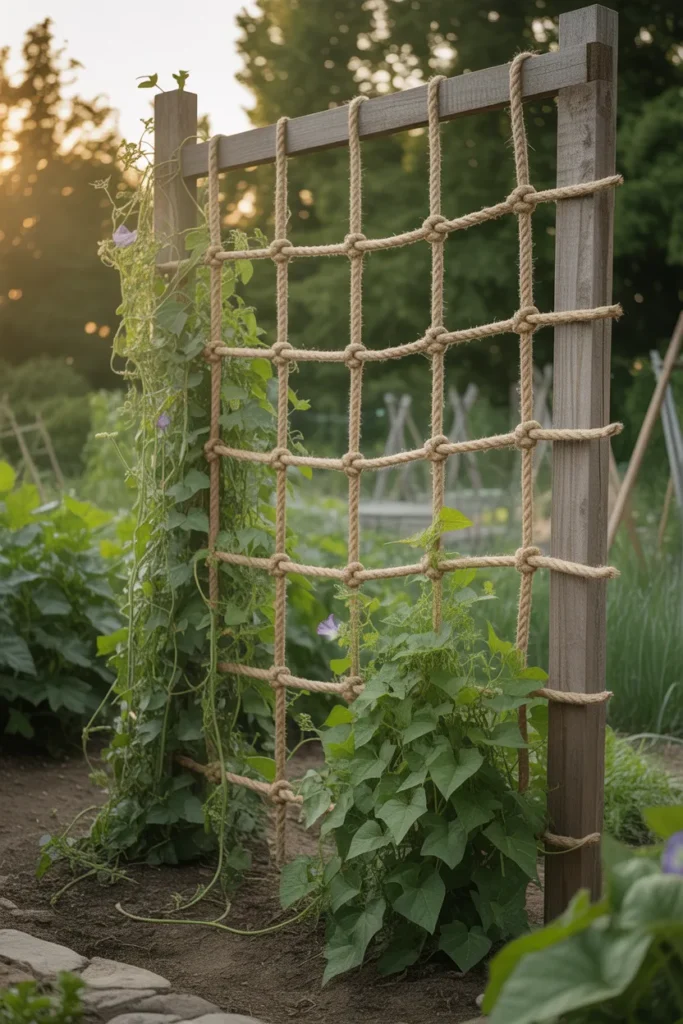
Hang vertical ropes from a horizontal bar. Vines will twist naturally around the rope as they grow.
11. Spiral Metal Trellis
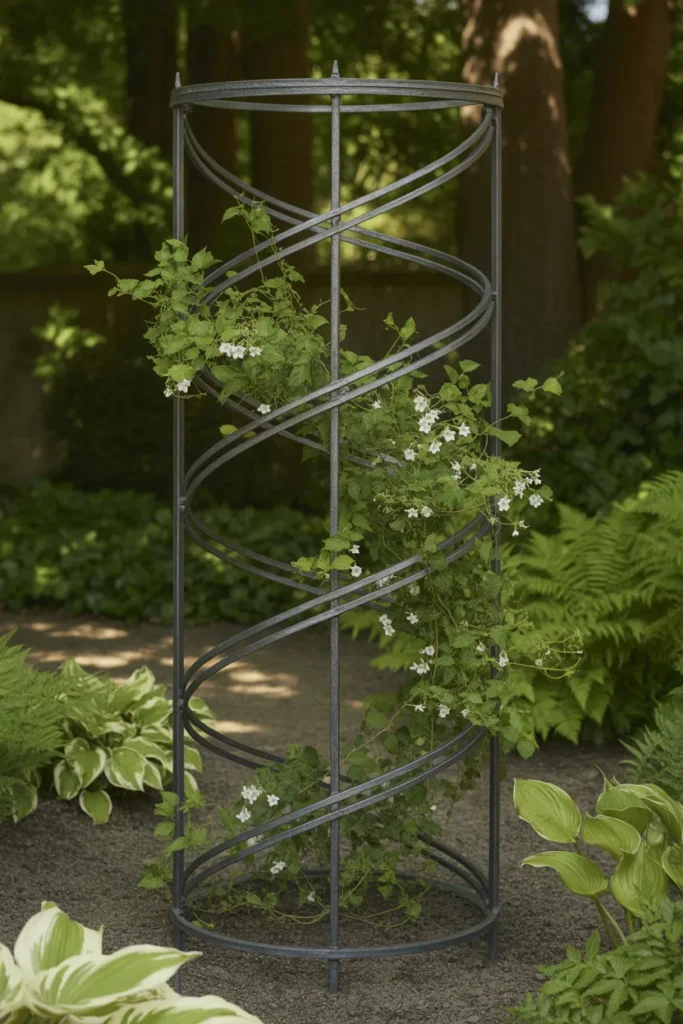
A spiral-shaped metal trellis guides vines upward while creating an attractive visual feature in your garden.
12. Raised Bed Frame Trellis
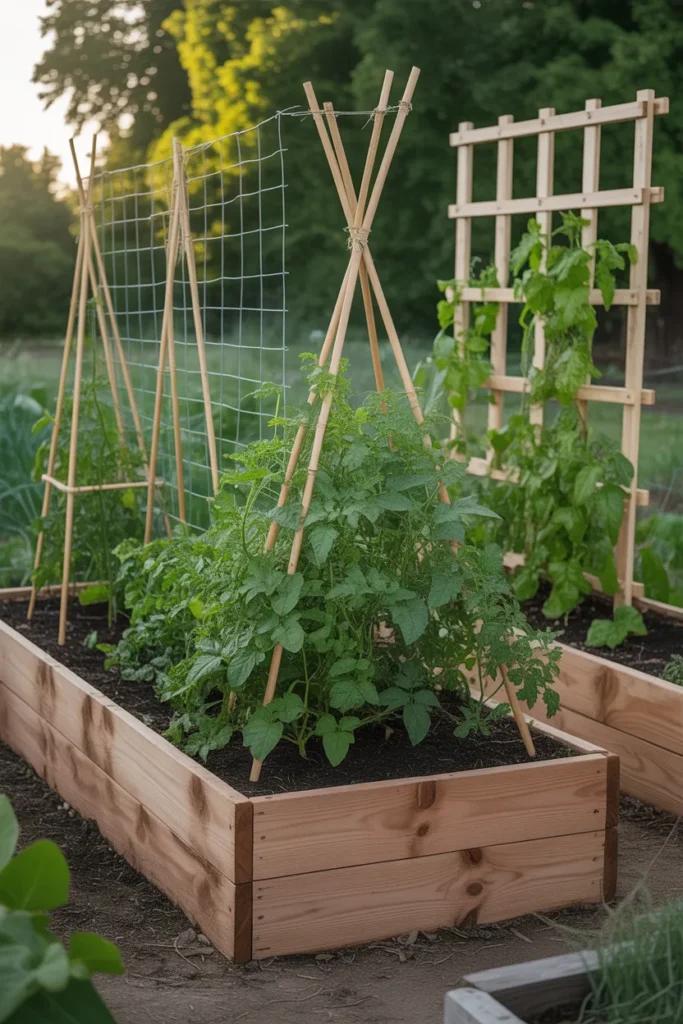
Attach vertical frames directly to your raised bed. This keeps climbing plants organized and maximizes vertical space.
13. Decorative Wooden Lattice Trellis
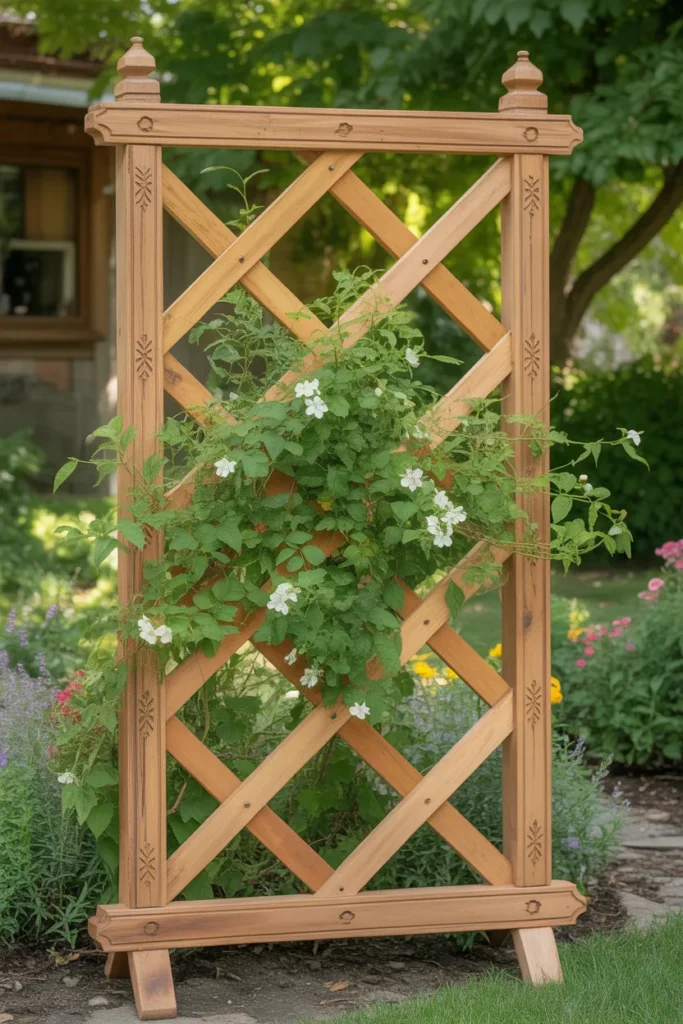
Craft a decorative lattice from wooden slats. Not only does it provide structure, but it also adds charm to your garden’s aesthetic.
14. Multi-Plant Arch Trellis
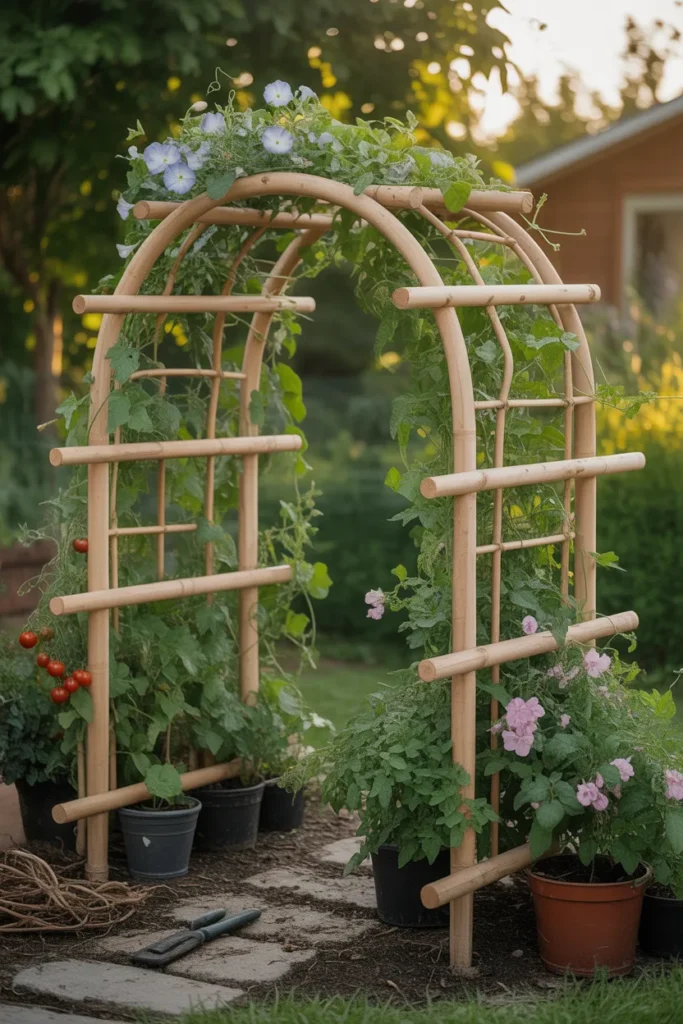
Plant climbing vegetables on both sides of an arch for a lush, green walkway.
Companion planting ideas with cucumber trellis ideas.
15. Hanging Trellis
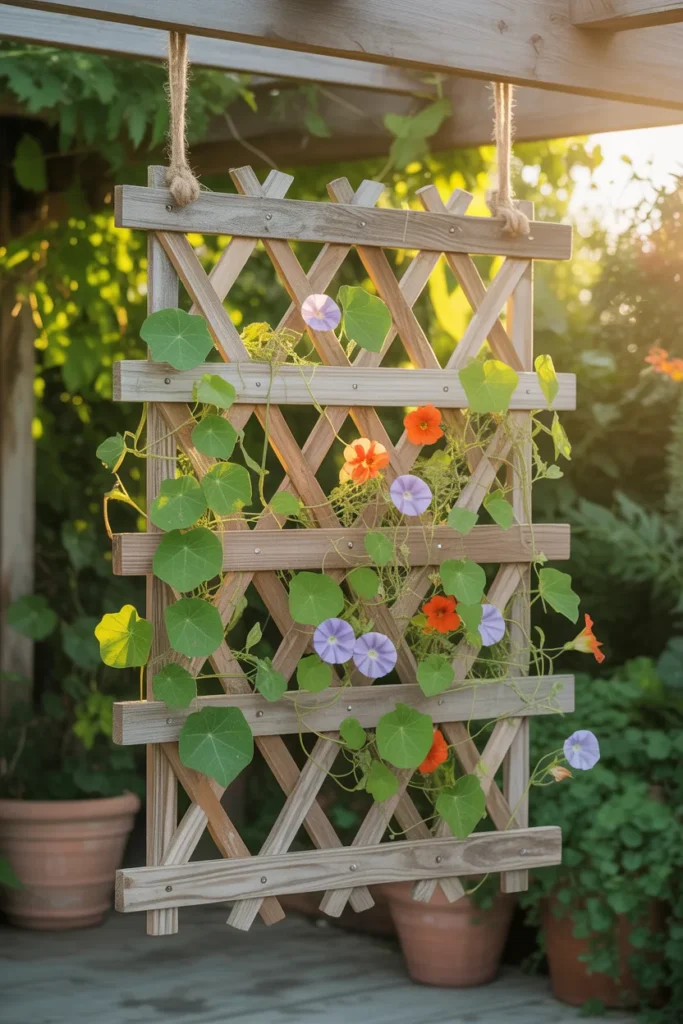
Suspend twine or netting from a horizontal frame to create a unique hanging structure.
Must read: 10 Smart Tomato Trellis Ideas to Grow More Tomatoes in Small Spaces
16. PVC Teepee Trellis
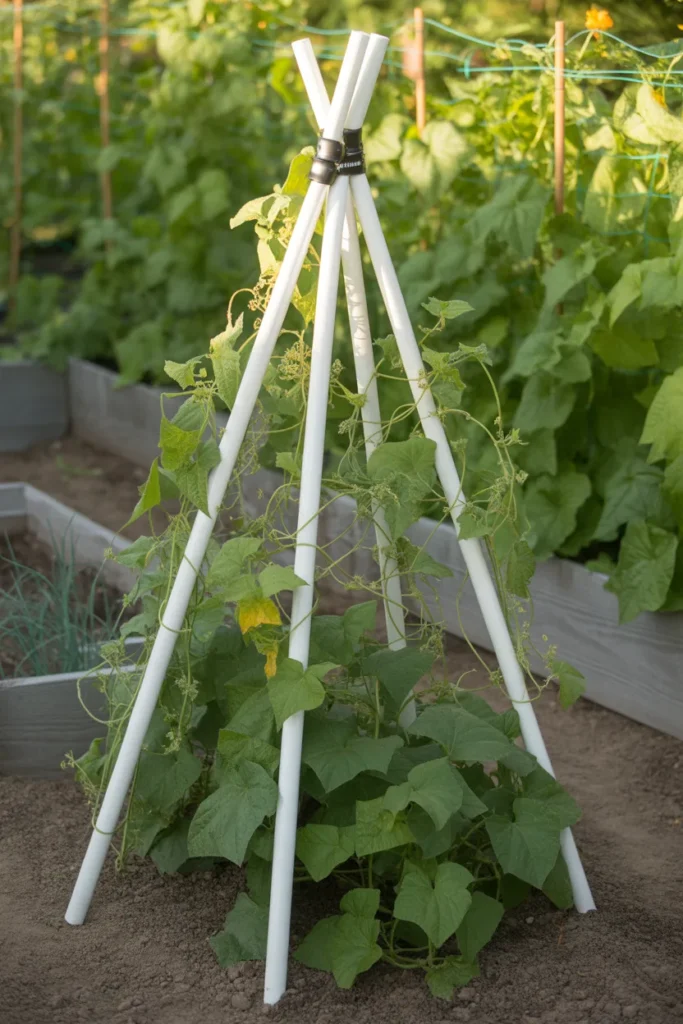
A DIY version of a bamboo teepee using PVC pipes. Lightweight, weather-resistant, and easy to assemble.
17. Ladder-Style Pallet Trellis
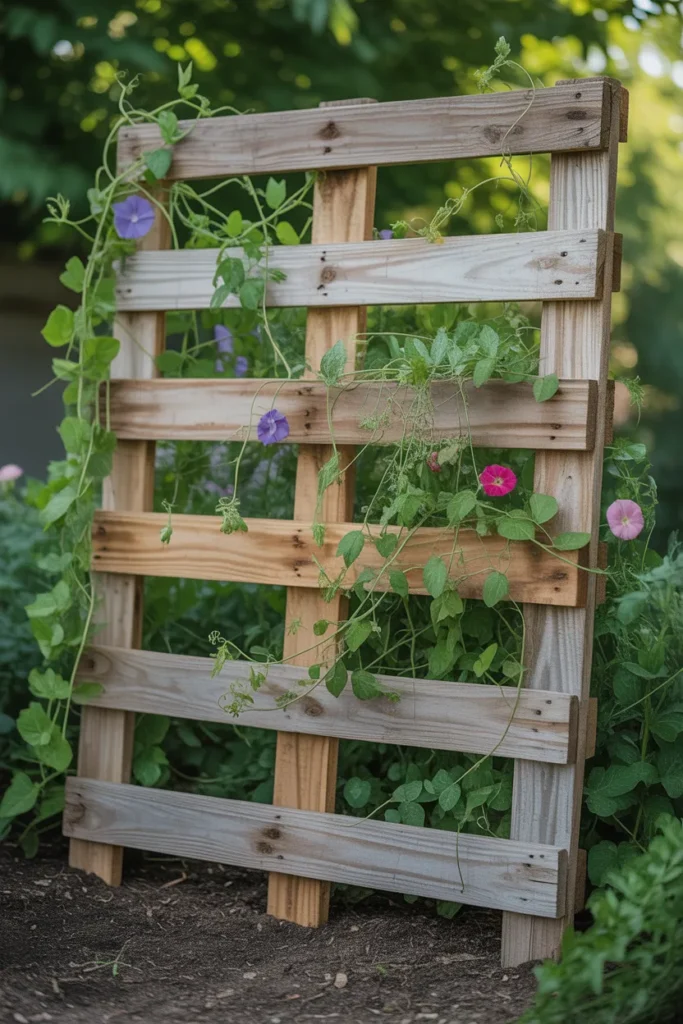
Stack pallets vertically to maximize vertical climbing space in small garden areas.
18. Teepee with Interwoven Twine
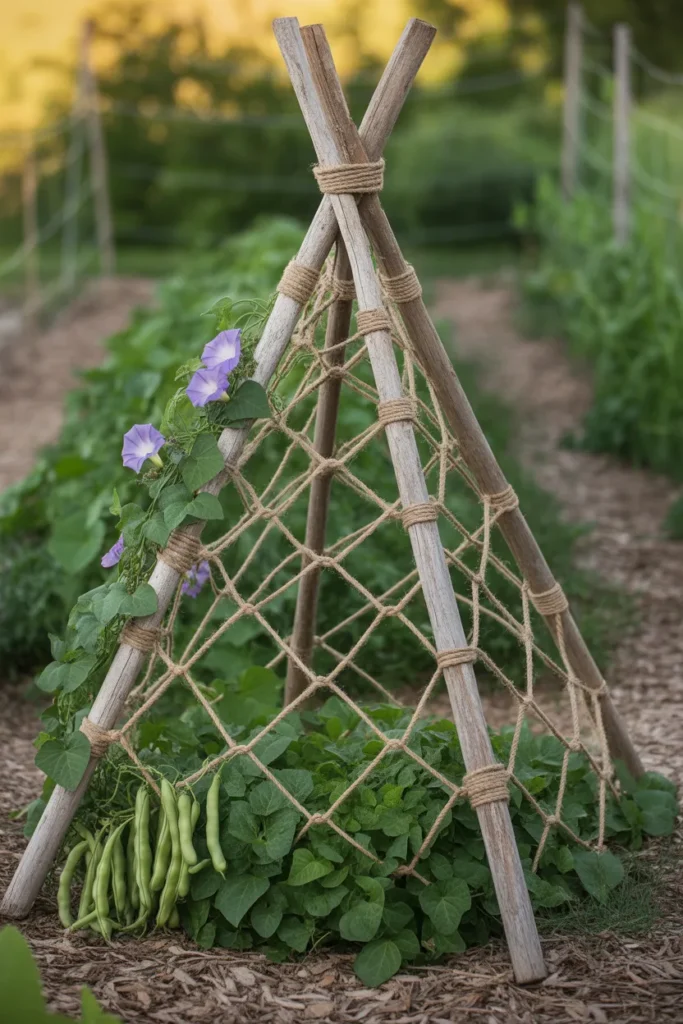
Weave strings horizontally across a bamboo or PVC teepee to provide additional climbing options for vegetables.
19. Wire Mesh Panel
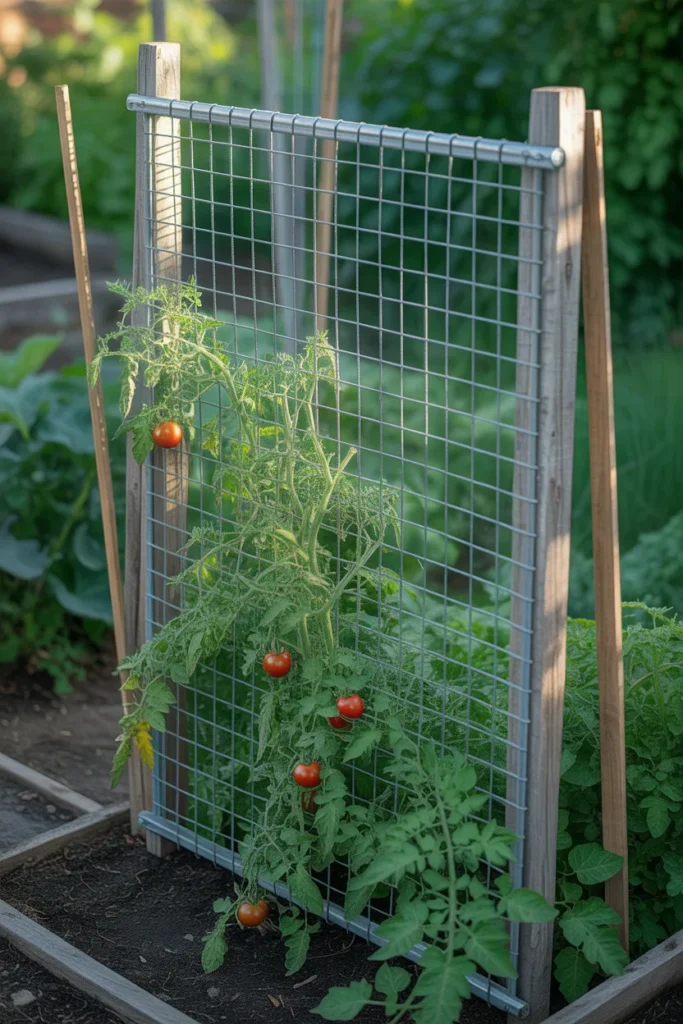
Install wire mesh panels vertically. Strong enough to hold heavier vines, perfect for beans and cucumbers.
20. DIY Rope Trellis
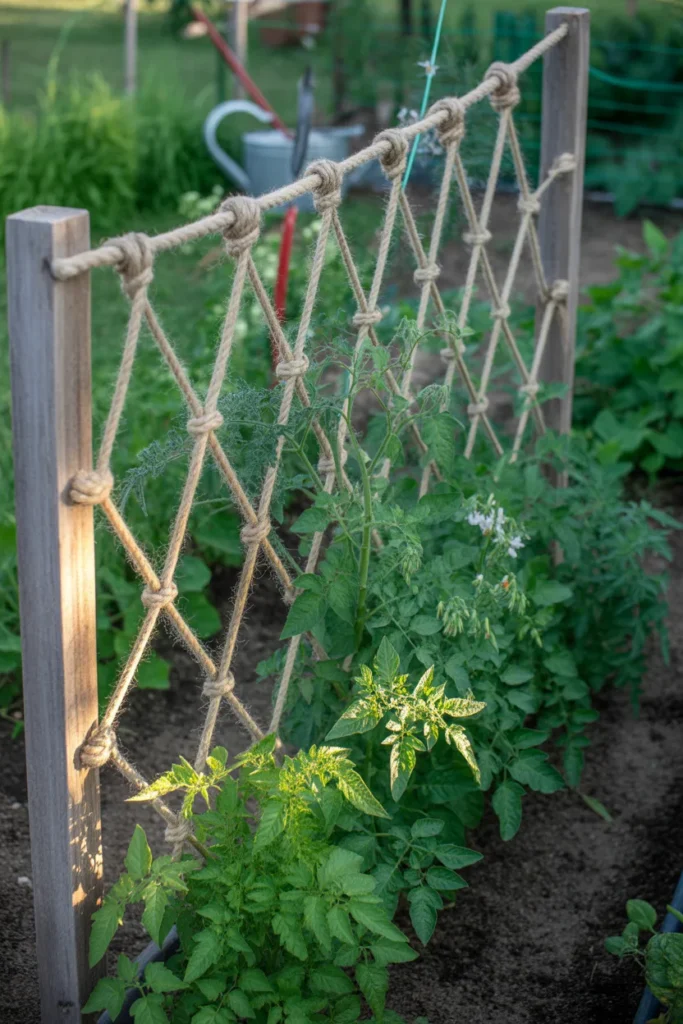
Hang multiple ropes from a horizontal bar. Vines weave around naturally as they grow.
21. Spiral Wooden Trellis
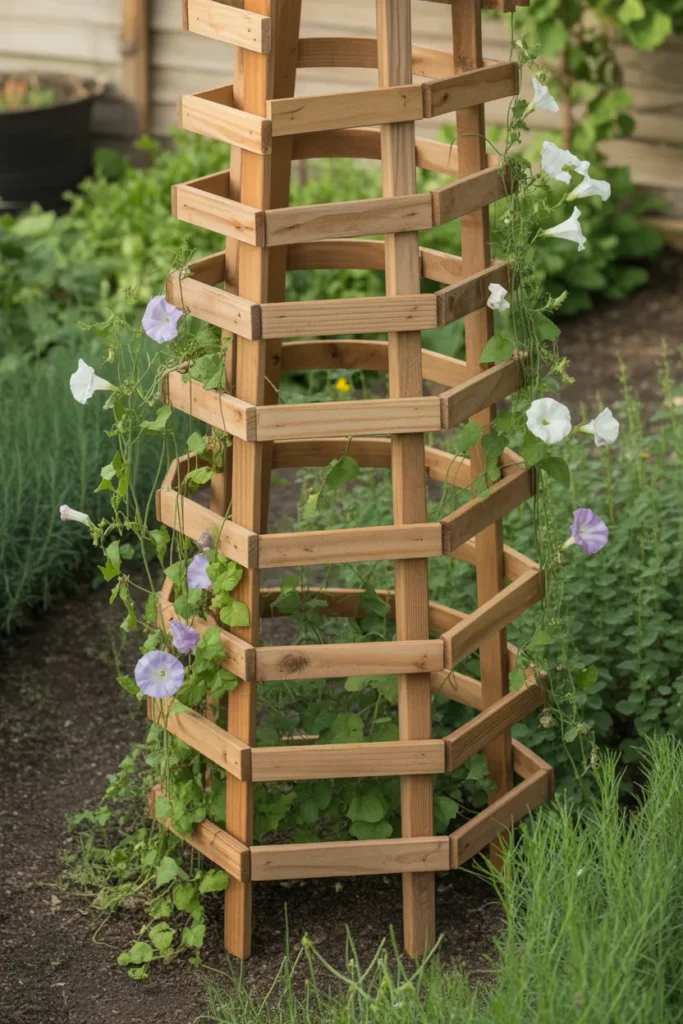
Carve or assemble wooden spirals for an elegant climbing structure that doubles as a garden décor piece.
22. Folding Ladder Trellis
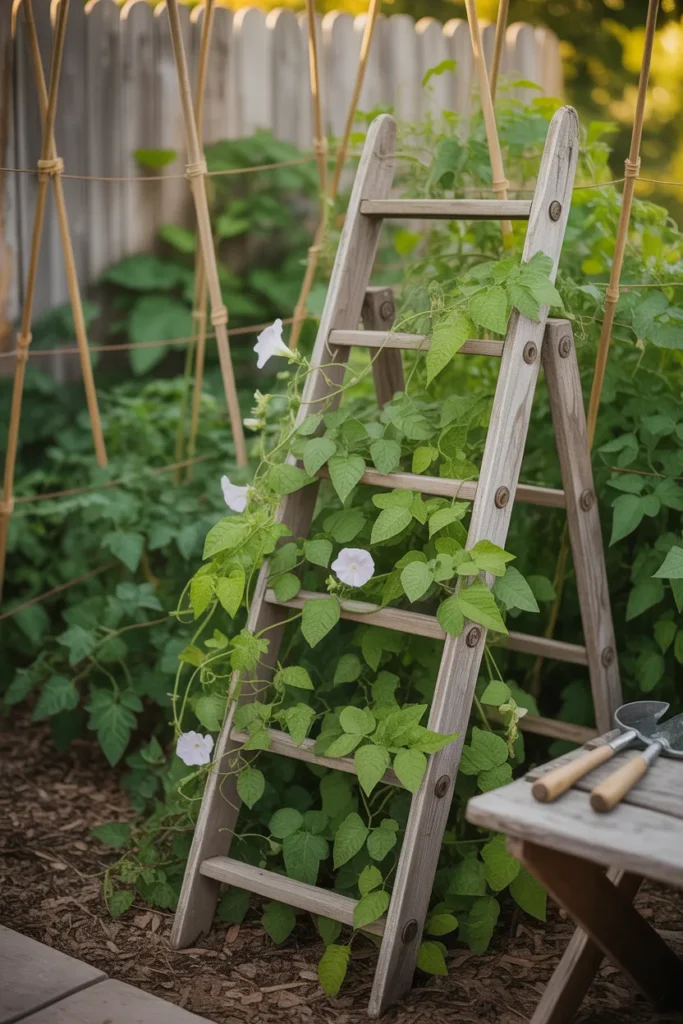
Portable and adjustable, this design works well for small or temporary garden areas.
23. Teepee with Garden Twine
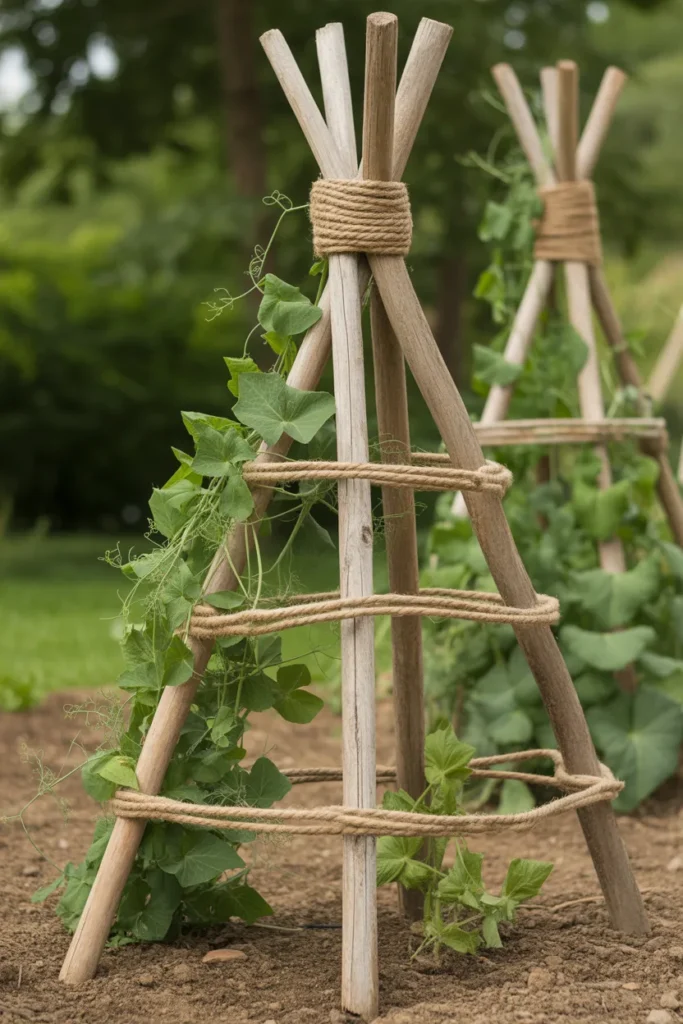
Tie vines gently to the teepee with soft twine. Ideal for delicate shoots or young plants.
24. Decorative Arch with Netting
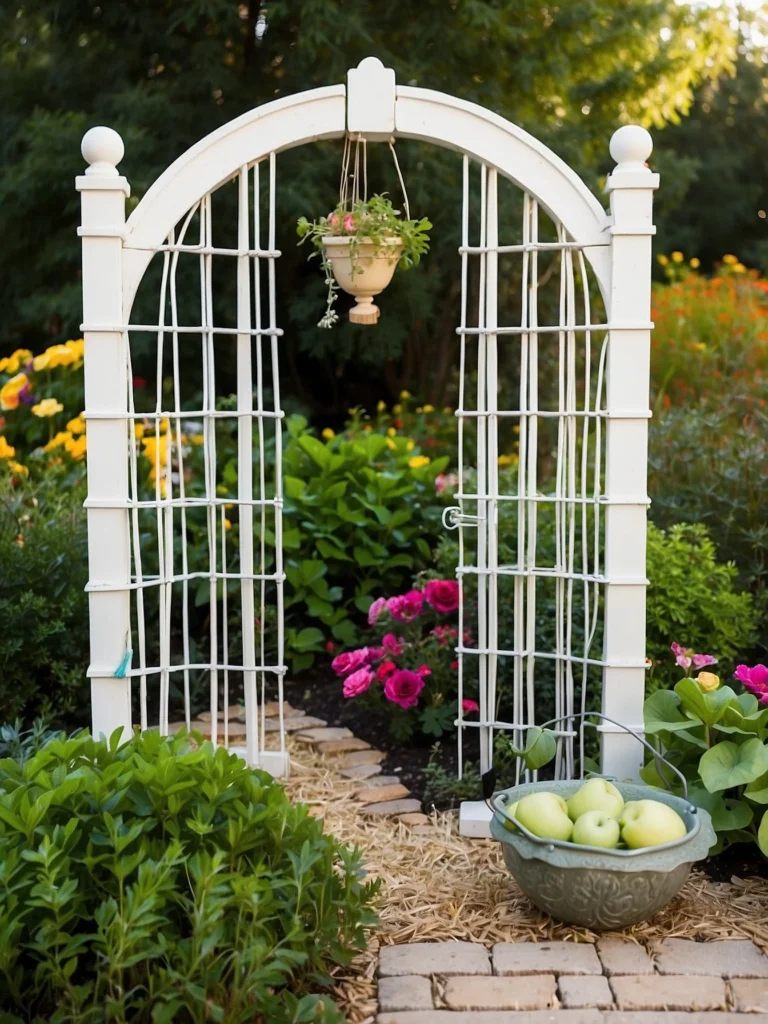
Combine wooden arches with netting for maximum climbing support. Perfect for cucumbers, beans, and tomatoes.
25. Portable DIY Trellis Frame
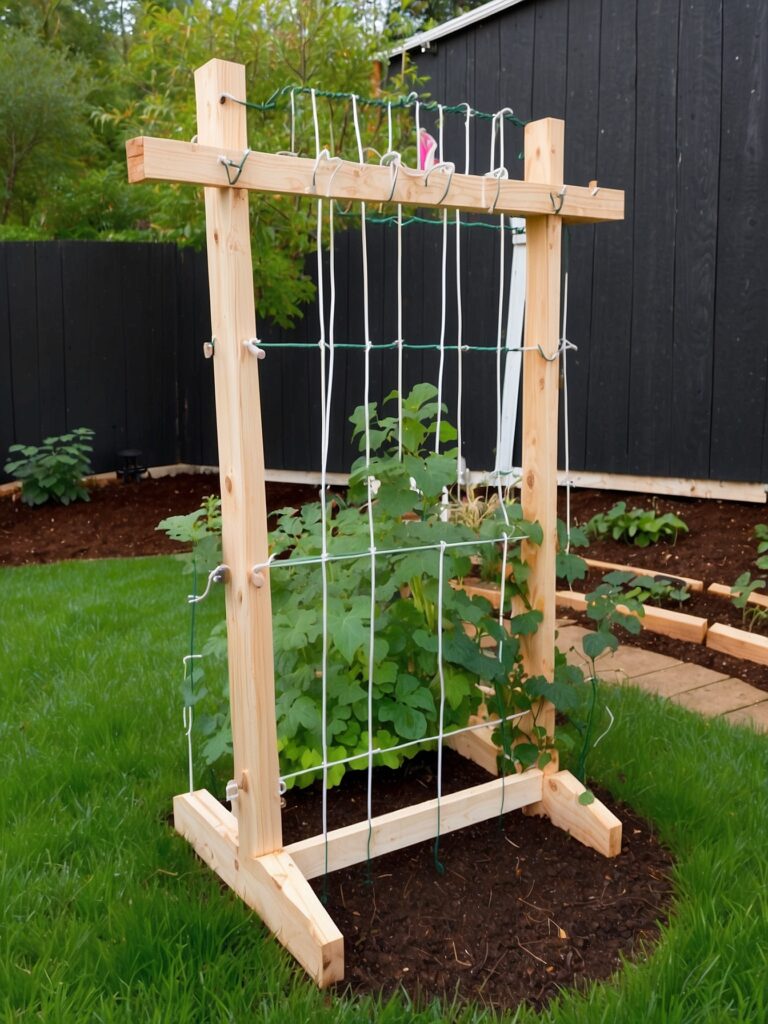
Build a frame that can be moved around the garden to follow sunlight, maximize space, or rotate crops.
Must read: 20 Green Bean Trellis Ideas for Bigger Harvests in Small Spaces
Tips for Building a Successful DIY Trellis
- Train young vines early to attach to your structure.
- Use soft garden ties to support heavier vines without damaging them.
- Prune excess leaves for better airflow and sunlight penetration.
- Water consistently at the base of your plants for optimal growth.
The Bottom Line
A DIY garden trellis is one of the easiest ways to transform a small or unruly garden into a productive vertical paradise.
From bamboo teepees to decorative arches and ladder-style designs, these 25 DIY garden trellis ideas work for beans, cucumbers, tomatoes, and other climbing vegetables.
FAQs for DIY Garden Trellis Ideas
What is the easiest DIY trellis for beginners?
The easiest trellis to build is a bamboo teepee or simple string trellis. Both require minimal materials, little experience, and work well for beans, cucumbers, or peas.
Pro Tip: Space the poles or strings evenly for proper vine growth.
Can I grow multiple vegetables on the same DIY trellis?
Yes! You can combine climbing vegetables like beans, cucumbers, and tomatoes on the same trellis. Just make sure each plant has enough room to climb without overcrowding.
What materials are best for a DIY garden trellis?
Popular materials include bamboo, wood, PVC, metal mesh, or recycled ladders. Choose materials that are sturdy enough to support your plants as they mature.
How tall should a DIY trellis be for beans or cucumbers?
Most DIY trellises should be 5–7 feet tall, depending on the vegetable. Taller trellises allow full vine growth and easier harvesting while keeping plants off the ground.
How do I maintain a DIY trellis to keep plants healthy?
Guide young vines early to attach to the structure.
Prune excess leaves to improve airflow.
Use soft ties for heavy vines to prevent snapping.
Water at the base consistently to reduce disease risk.