
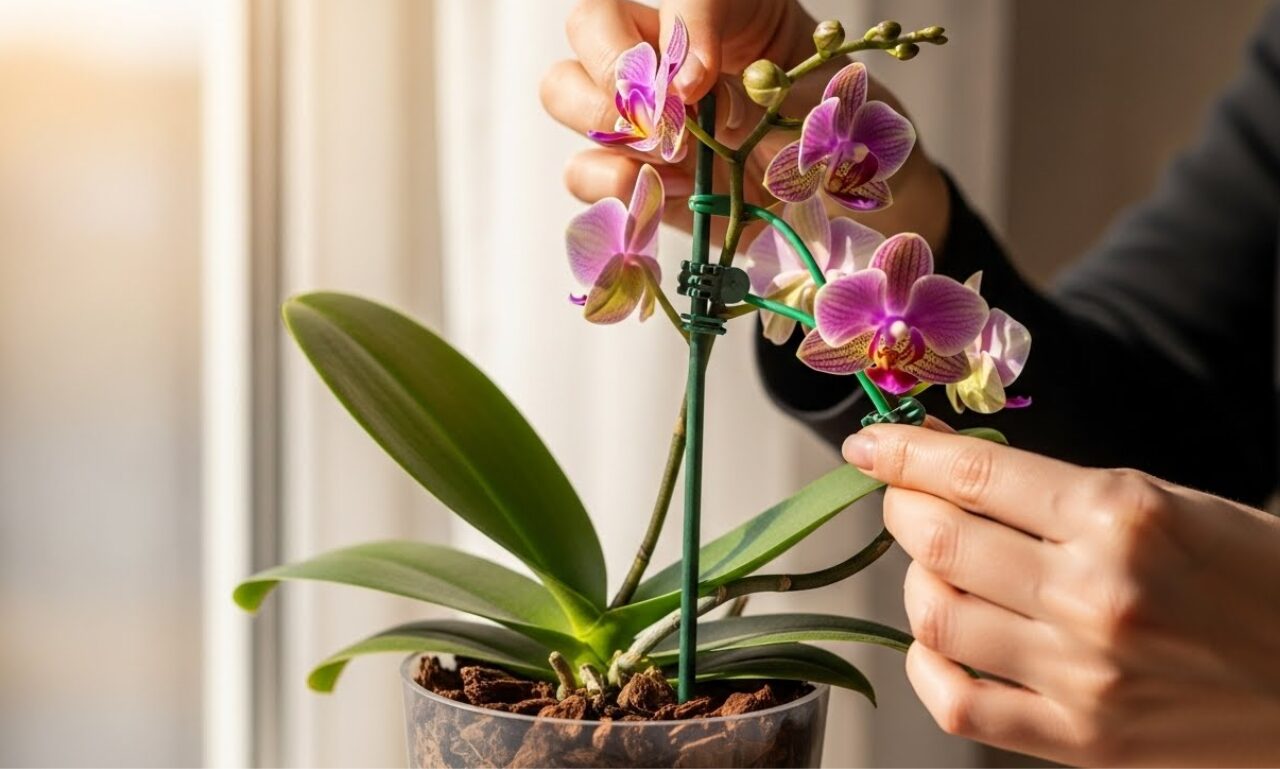
The sooner you stake orchid stems, the better.
Winter is an exhilarating time in the world of houseplants. With the yard resting, the indoor garden still keeps us busy with small but important care tasks. One of the best surprises of the season is when new orchid flower spikes begin to form, often weeks before you expect them. As soon as you see a flower spike emerge, it’s the perfect moment to train new orchid flower spikes so they grow tall, straight, and strong.
Orchid care can be a little particular, but once you understand their flowering cycle, these elegant indoor flowering plants become incredibly rewarding. Many moth orchids start developing spikes during cooler months because the drop in temperature signals the plant to prepare for spring blooms. This is when early support becomes essential.
I’ve been growing orchids for years, and every winter I watch for new spikes. As soon as I spot them, I gently secure them with an orchid plant stake and orchid clips or soft plant ties. Waiting too long can cause bending, breakage, or short spikes that struggle to hold the weight of flowerheads later on. Training them early takes only seconds and truly makes the difference between an average display and a stunning one.
How To Train New Orchid Flower Spikes
It’s a common mistake to let new orchid flower spikes grow for too long without support. When a flower spike emerges, it’s soft, flexible, and easily guided upward. But if you wait, the stem begins to harden, causing it to lean sideways or grow horizontally instead of forming a tall, elegant arc.
Untrained spikes also risk bending or snapping under the weight of flowerheads, especially on mature orchids with multiple blooms. To avoid this, I always train new orchid flower spikes as soon as I notice them. Using a slim orchid plant stake and a couple of orchid clips or soft plant ties, you can gently guide the spike upward without damaging the stem.
Here’s the simple method I use every winter to keep my spikes strong and supported:
How to Train New Orchid Flower Spikes

When new orchid flower spikes first emerge, it’s easy to mistake them for aerial roots. But they grow quickly and soon reveal themselves as slender green stems preparing for the next bloom cycle. Because these spikes are soft and flexible when young, this is the perfect moment to train new orchid flower spikes and guide them upward.
Gently begin directing the spike up an orchid plant stake (like this one from Amazon)once it’s long enough to handle. If you’ve purchased a moth orchid recently (like the purple orchid from The Sill), it will likely already have a stake attached to each flowering stem. I tend to reuse these with every flowering cycle, but as my orchid gets bigger and produces more spikes, I often need extra supports. In general, every spike should have its own stake.
Insert your stakes carefully into the potting mix alongside the emerging spikes. If your plant is growing in the right orchid potting mix (i.e. a loose orchid bark mix from Amazon or even a DIY orchid potting mix), the stake should slide in easily. Just move slowly and gently so you don’t damage any roots.
Next, test whether the stake is positioned correctly by holding the stem upright and seeing if it naturally rests against the support. If the spike bends away or doesn’t sit comfortably, reposition the stake until the alignment feels right.
Then, attach the spike using orchid clips (from Amazon) or soft plant ties (like twist ties from Walmart). These should sit loosely—tight ties can damage the stem. You may need to adjust these as the spike grows taller.
Avoid attaching the top few inches of the spike. This upper section is where the flower buds will form, and they need space to develop the elegant, curved shape that orchids are known for. Proper staking also prevents the spike from snapping under the increasing weight of flowerheads as they mature.
At the end of the flowering cycle, the stem will eventually turn yellow. When it does, simply cut this off at the base and repeat this process again the next time your orchid sends out new spikes.
10pcs Orchid Stakes and Clips
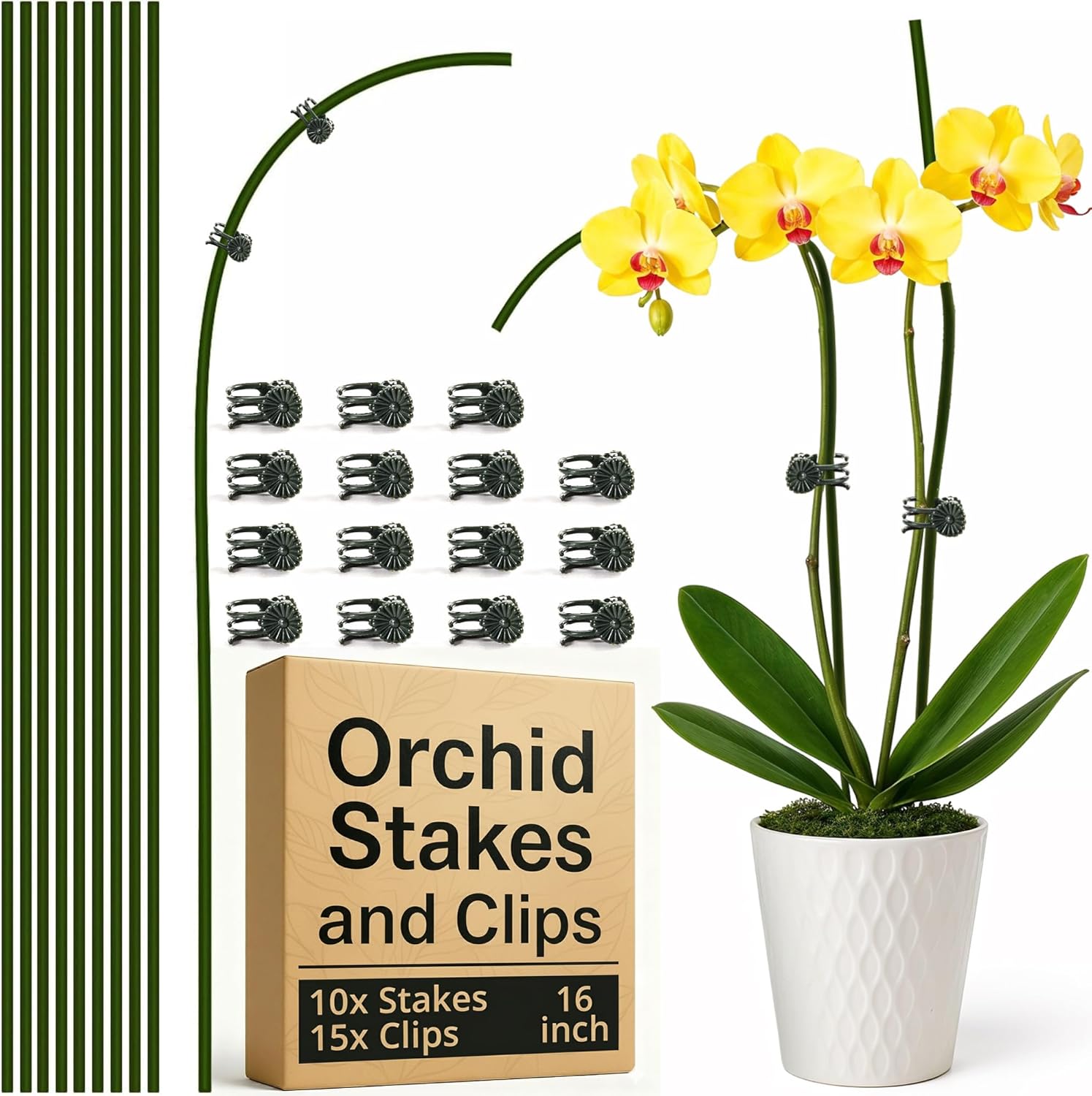
This handy 10-piece set gives you everything you need to support multiple orchid stems at once. The 16-inch stakes are sturdy yet slightly flexible, allowing you to gently shape them to follow the natural curve of your orchid as it grows. Each stake pairs with an easy-to-use clip, making it simple to guide new flower spikes upward without damaging the plant. Ideal for anyone who wants neat, well-trained orchid stems all season long.
100 Flower Plant Clips
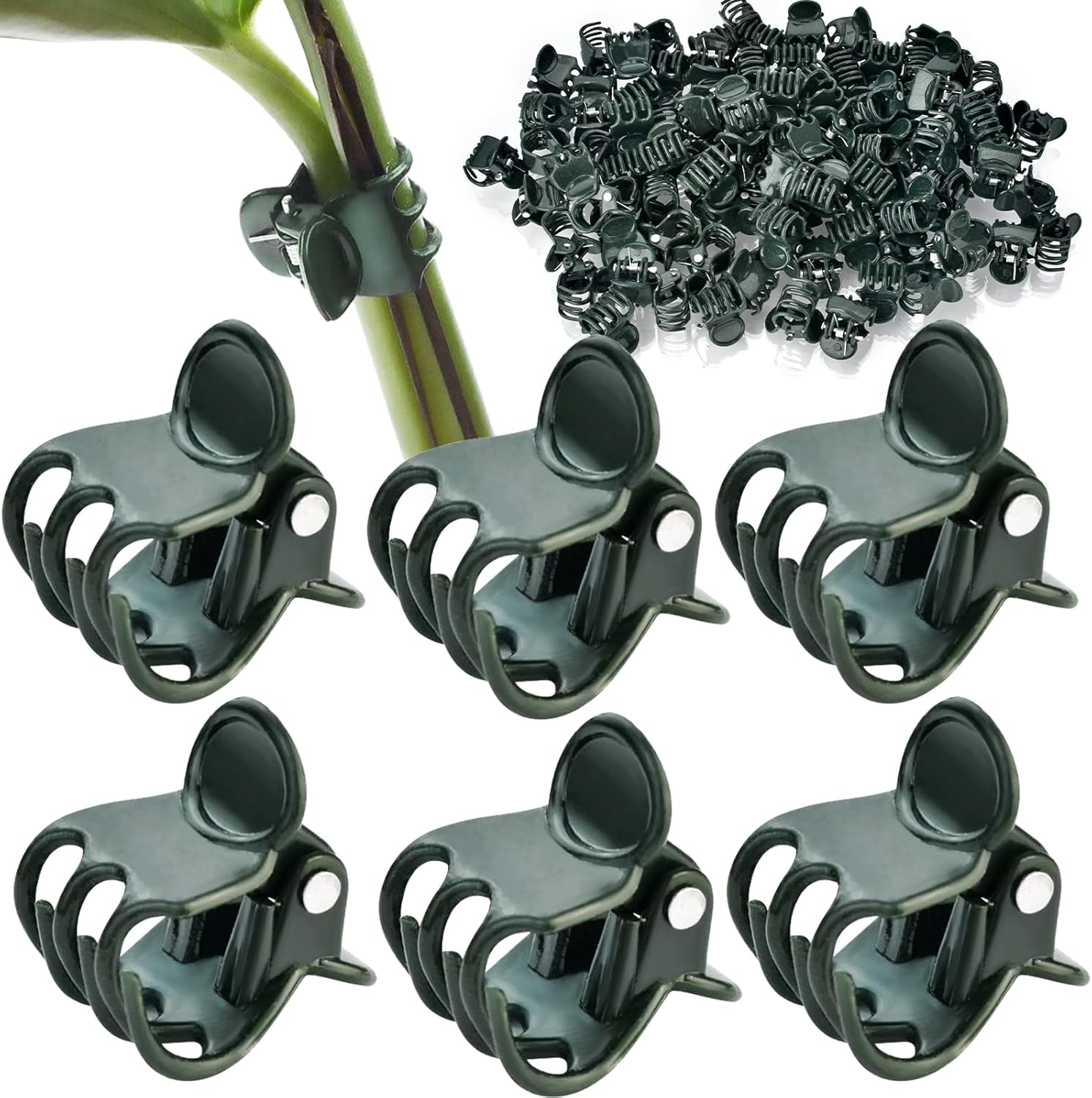
These charming flower-shaped clips make training orchid stems quick and gentle. With 100 pieces in each pack, you’ll have a bunch on hand for every blooming cycle. They’re easy to fasten, hold stems securely, and won’t pinch or damage delicate growth. Perfect for keeping your orchids neatly supported.
12 Orchid Stakes with Clips
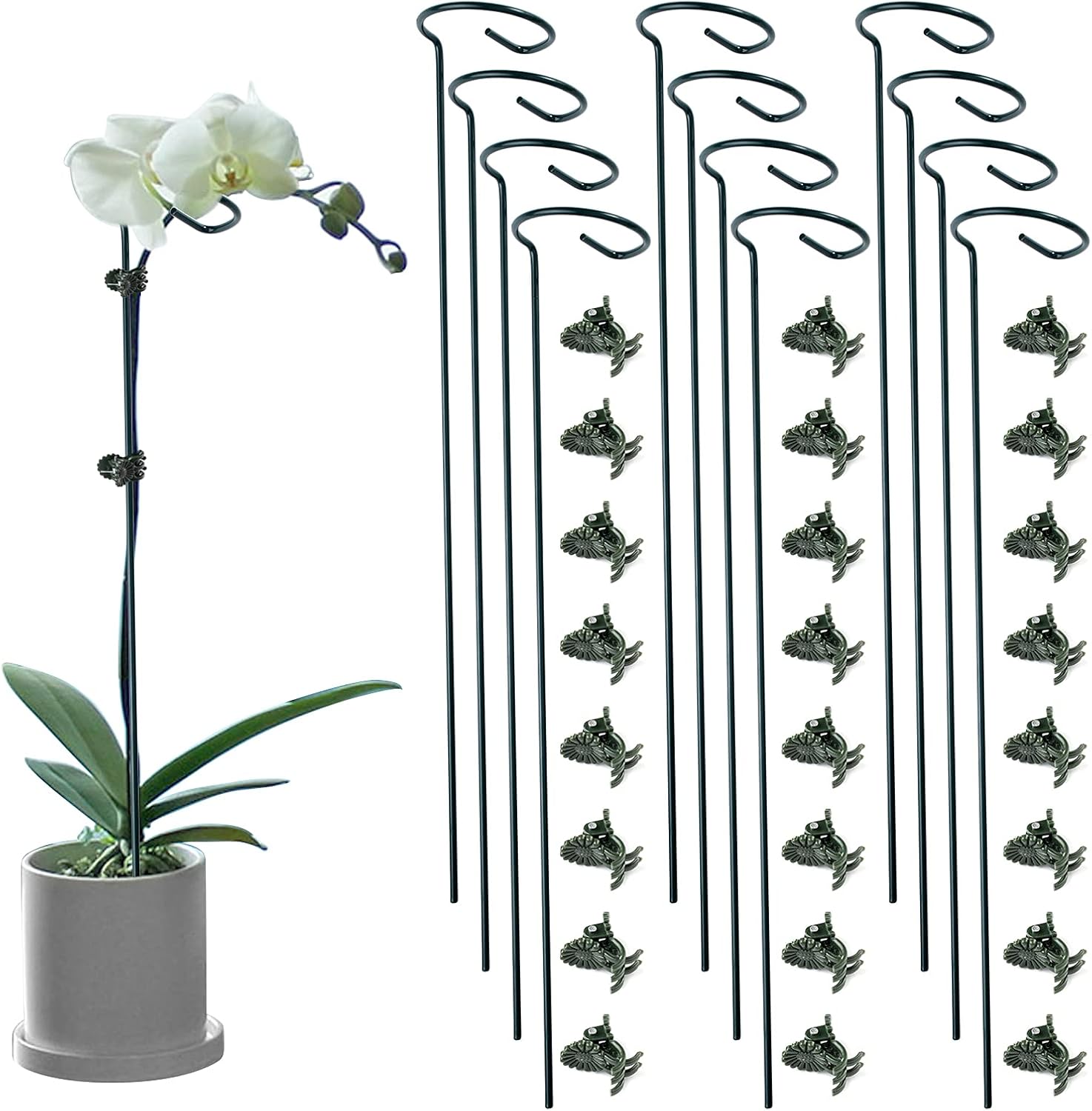
These 16-inch orchid stakes come with clips and a curved head to provide extra support for heavy flowerheads. Ideal for keeping multiple orchid stems upright and beautifully displayed.
FAQs
Can My Orchid Flower Without a Stake?
Yes, orchids can still produce flowers without a stake, but the flower spike may droop or snap under the weight of the blooms. This can also reduce sunlight exposure to some flowers, shortening their lifespan.
Once your orchid finishes flowering, don’t discard it. Proper care, including re-staking new orchid flower spikes and maintaining ideal conditions, can encourage it to bloom again.
Shop Essential Orchid Accessories
Blue Orchid Pot
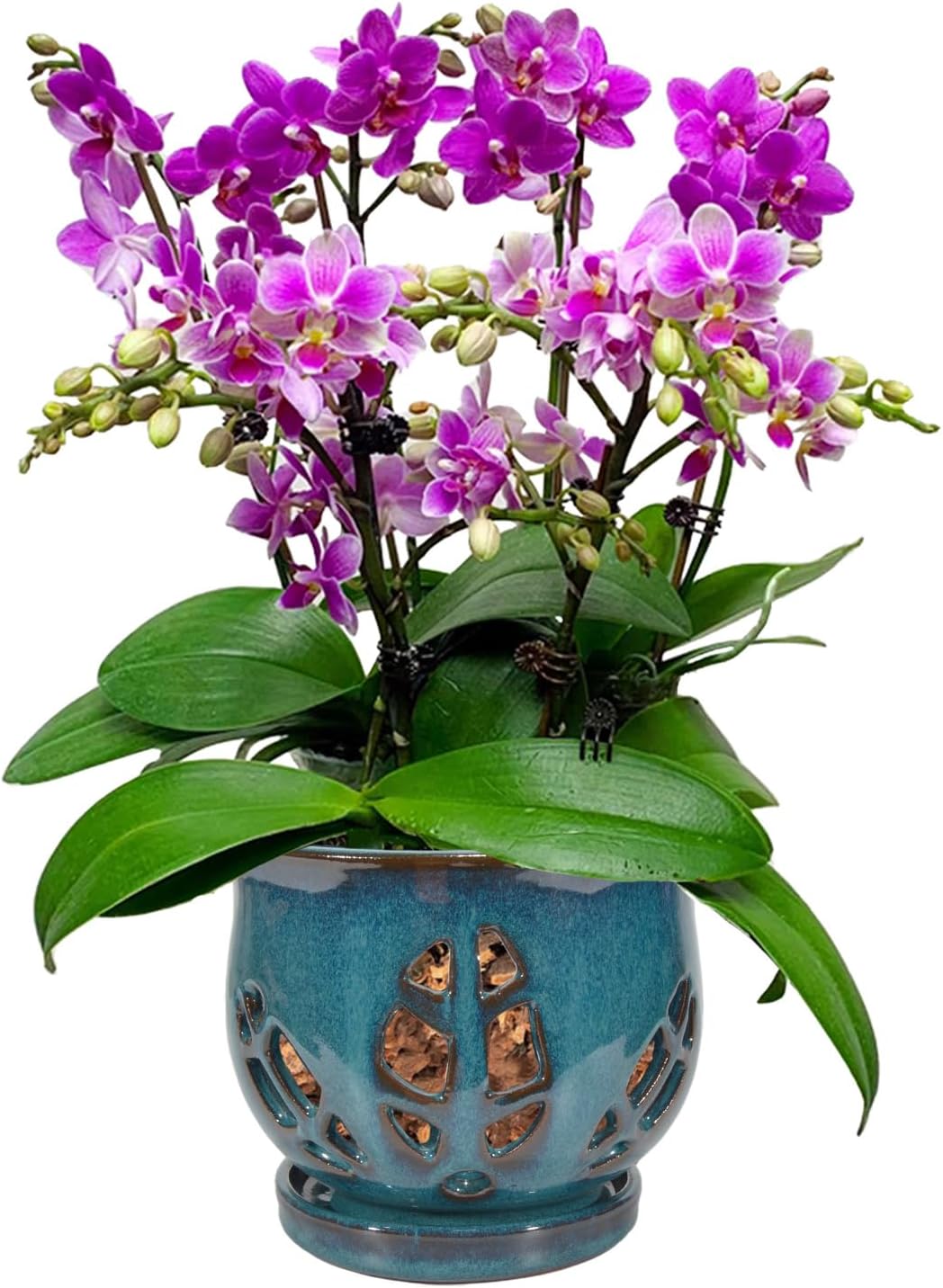
This elegant blue ceramic pot is perfect for orchids. Its cut-outs let aerial roots peek through for a striking display. It also includes a drainage hole and saucer to prevent waterlogging.
Green Glass Plant Mister
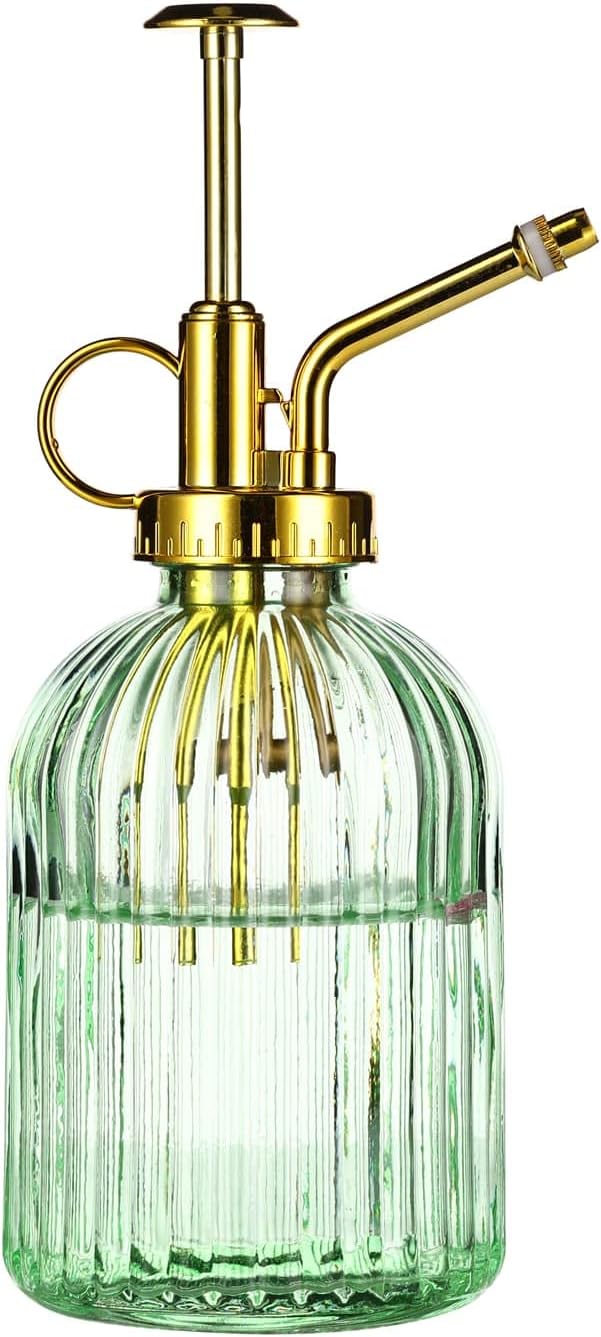
Keep your orchids happy with regular humidity using this green glass plant mister. Its stylish design also makes it perfect for display on a shelf or coffee table.
Orchid Plant Food Spikes
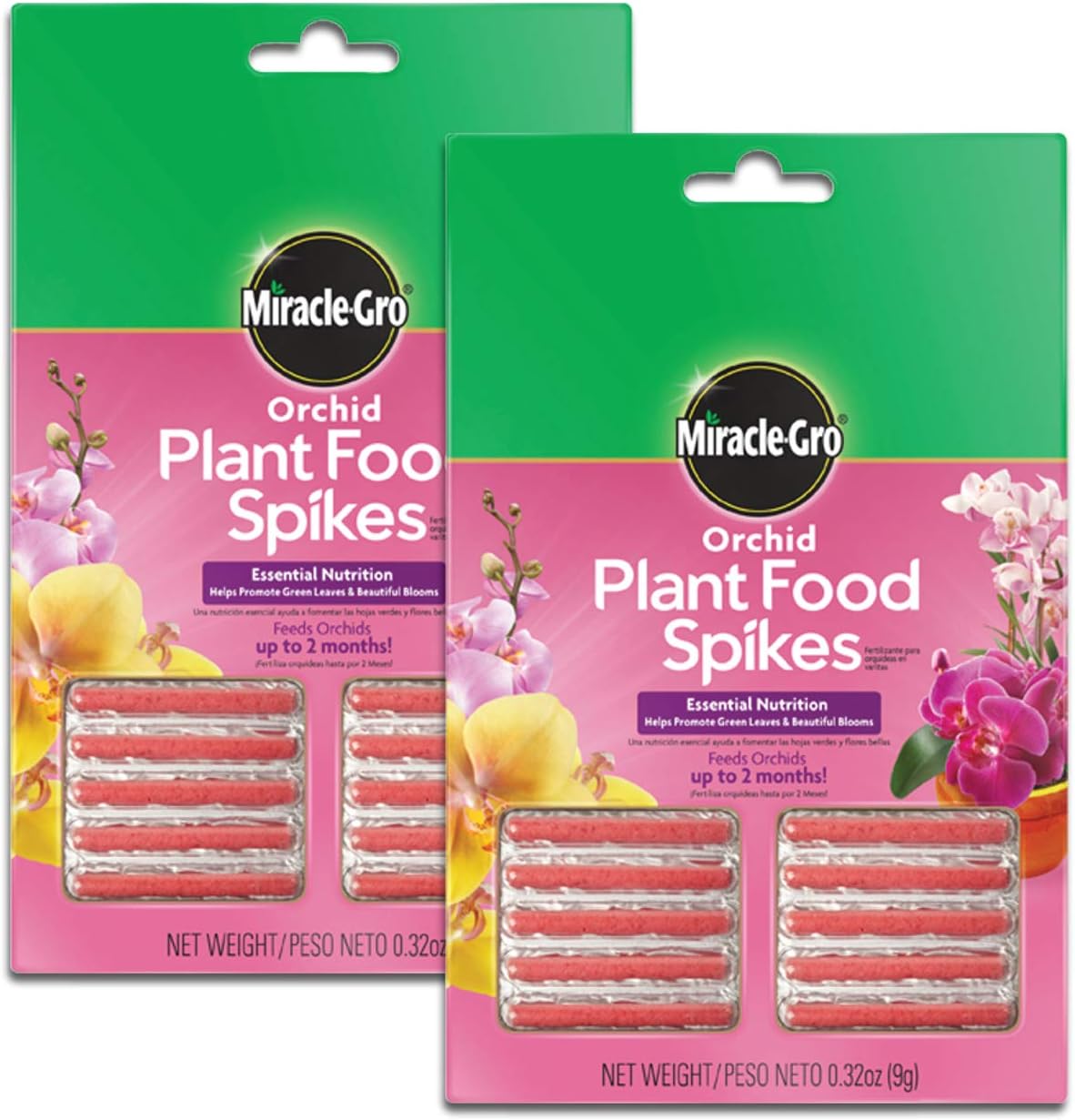
Provide your orchids with essential nutrients using these food spikes. Simply insert them into the pot for a slow-release fertiliser that feeds your plants for up to 2 months.
