
Are your bell peppers growing slowly, producing few fruits, or attracting pests? I used to think peppers only needed sun and water.
But I learned that the plants growing beside them can make a big difference. The right companion plants can improve growth, attract pollinators, reduce pests, and help you use garden space better.
After reviewing trusted gardening sources and expert guides, I found the best pairings that really help peppers thrive. In this guide, I’ll show you exactly what to plant with bell peppers for a stronger, healthier, and more productive garden.
Why Companion Planting Helps Bell Peppers
Bell peppers love warm weather, full sun, fertile soil, and steady moisture. Some nearby plants support peppers by repelling insects, improving soil health, shading roots, or attracting helpful bugs. Smart pairings can also save space in small gardens.
1. Basil
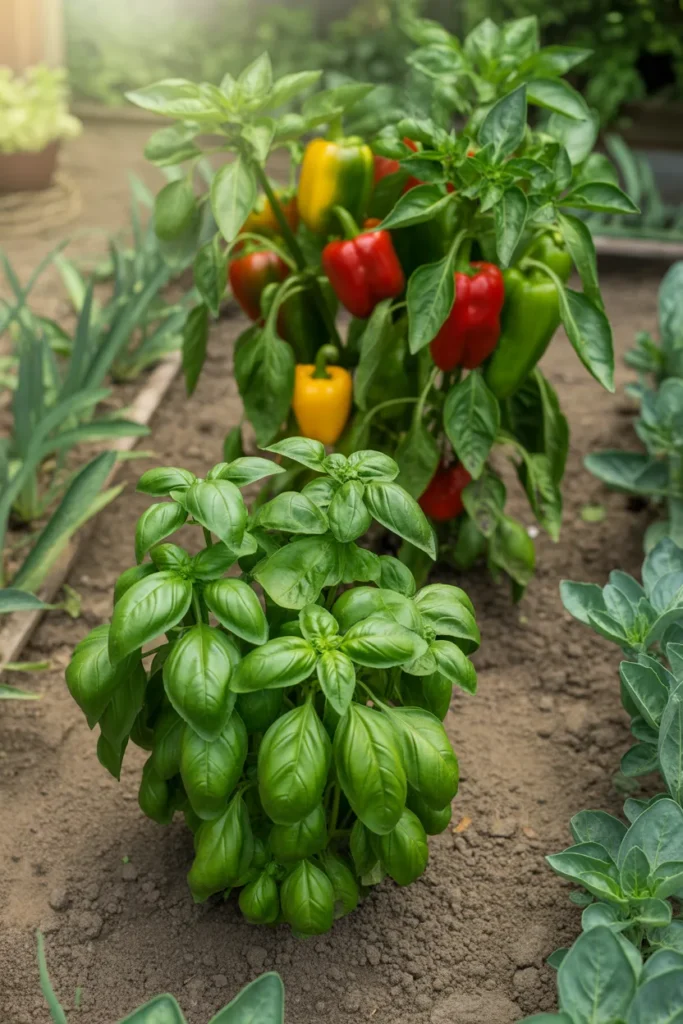
Basil is one of my favourite pepper companions. It grows well in similar conditions and is often used to help reduce pests like thrips and whiteflies.
It also gives you two useful harvests from one bed.
Pro Tip: Plant basil a few inches away so both plants get airflow.
2. Onions
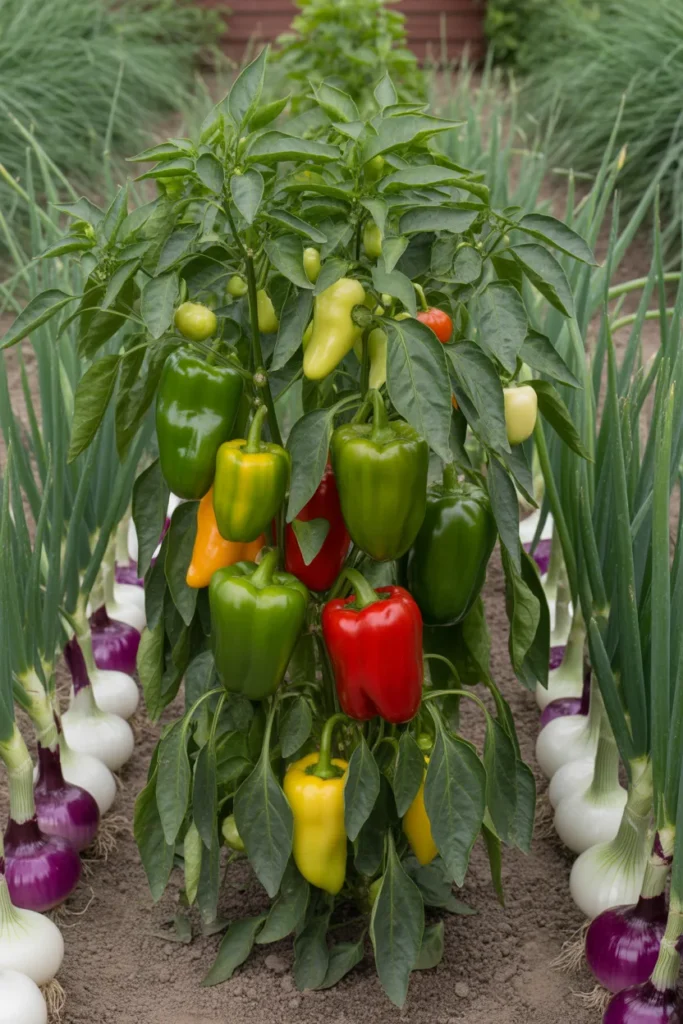
Onions are easy to tuck between pepper plants. Their strong smell may help confuse some pests.
They also grow upright, so they do not take up much space.
Pro Tip: Use green onions in tight beds.
3. Garlic
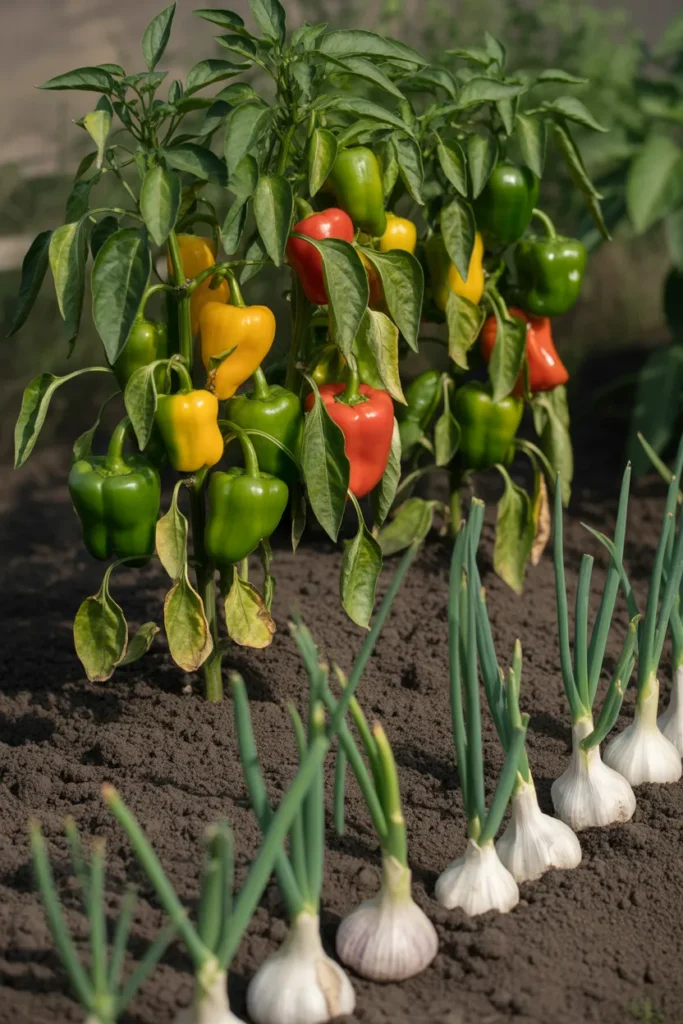
Garlic is another strong-scented allium that pairs well with peppers. It can be planted nearby without crowding the pepper roots too much.
Pro Tip: Keep garlic at the edges of the bed.
4. Chives
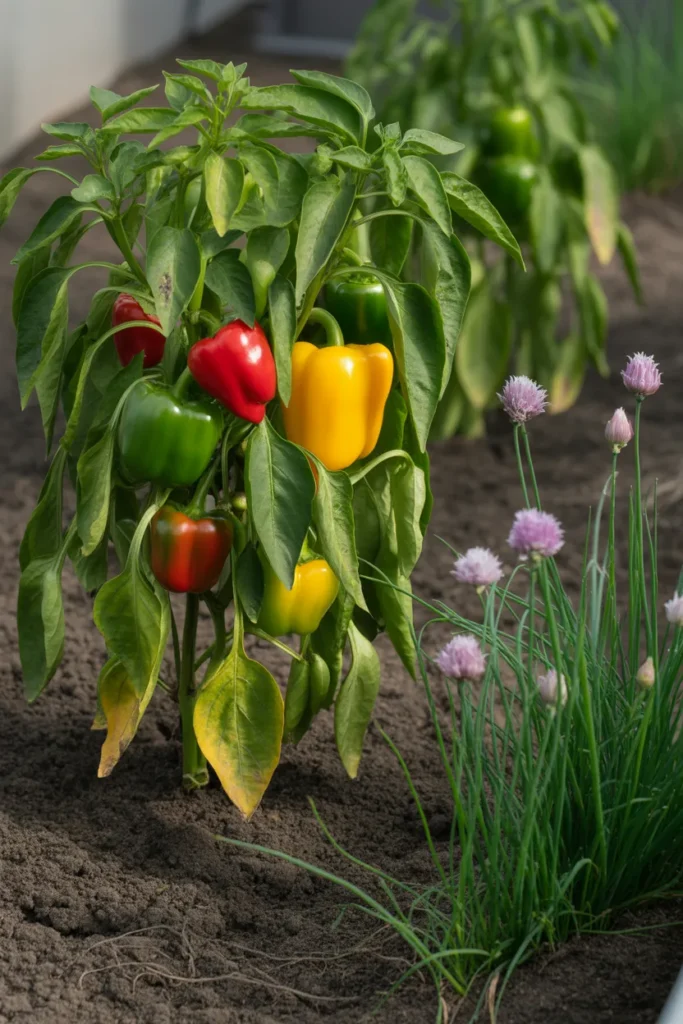
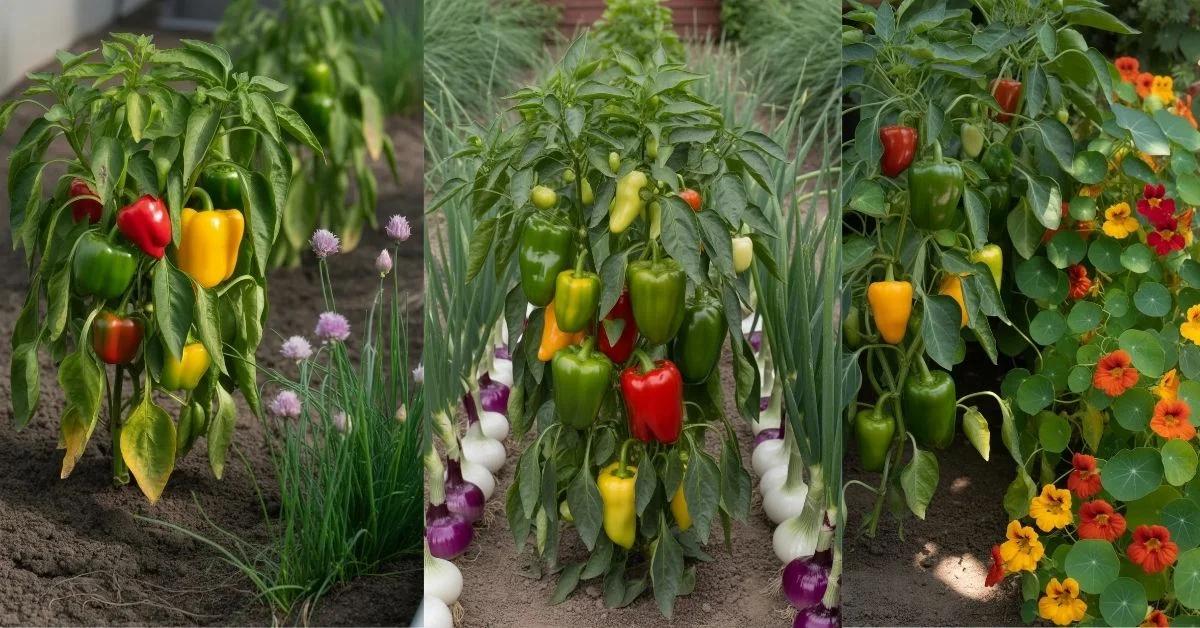
Chives stay compact and fit well around peppers. They are a smart choice for raised beds and containers.
Pro Tip: Trim often to encourage fresh growth.
5. Marigolds
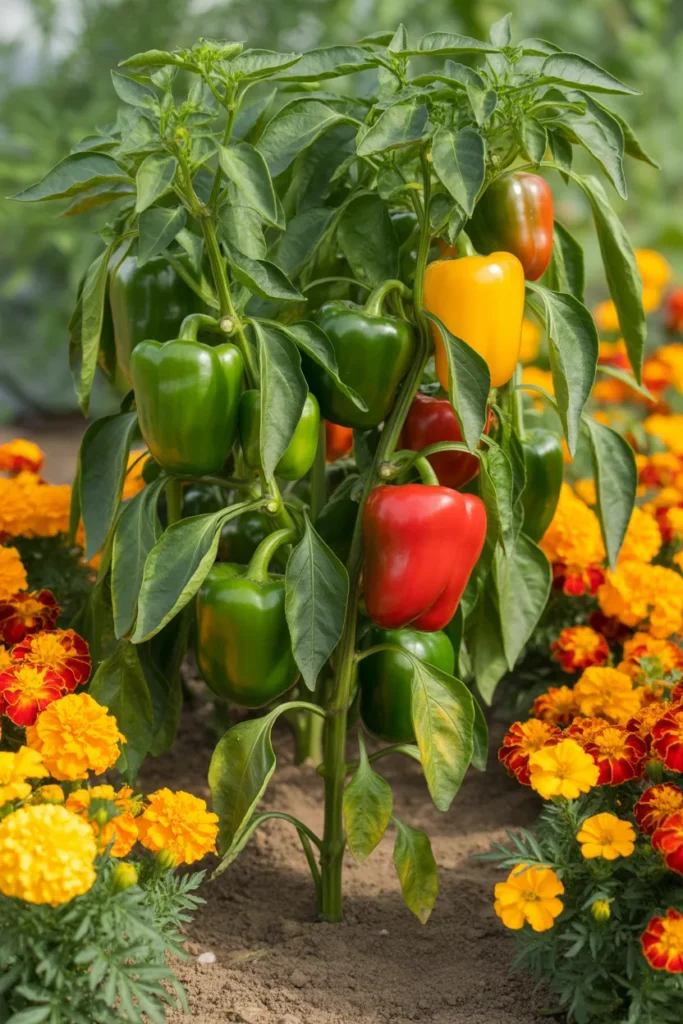
Marigolds are popular in vegetable gardens because they attract pollinators and beneficial insects.
They also add bright colours around pepper plants.
Pro Tip: Plant around bed borders.
6. Nasturtiums
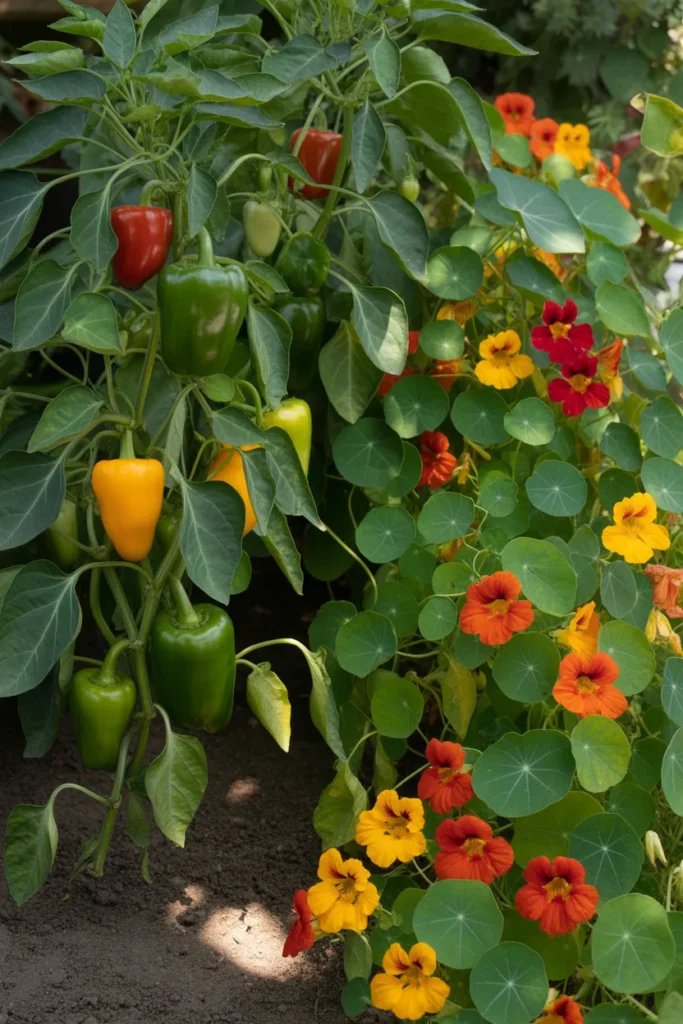
Nasturtiums are often used as a trap crop. They can attract pests away from vegetables.
They also bring colour and edible flowers to the garden.
Pro Tip: Give trailing types room to spread.
7. Carrots
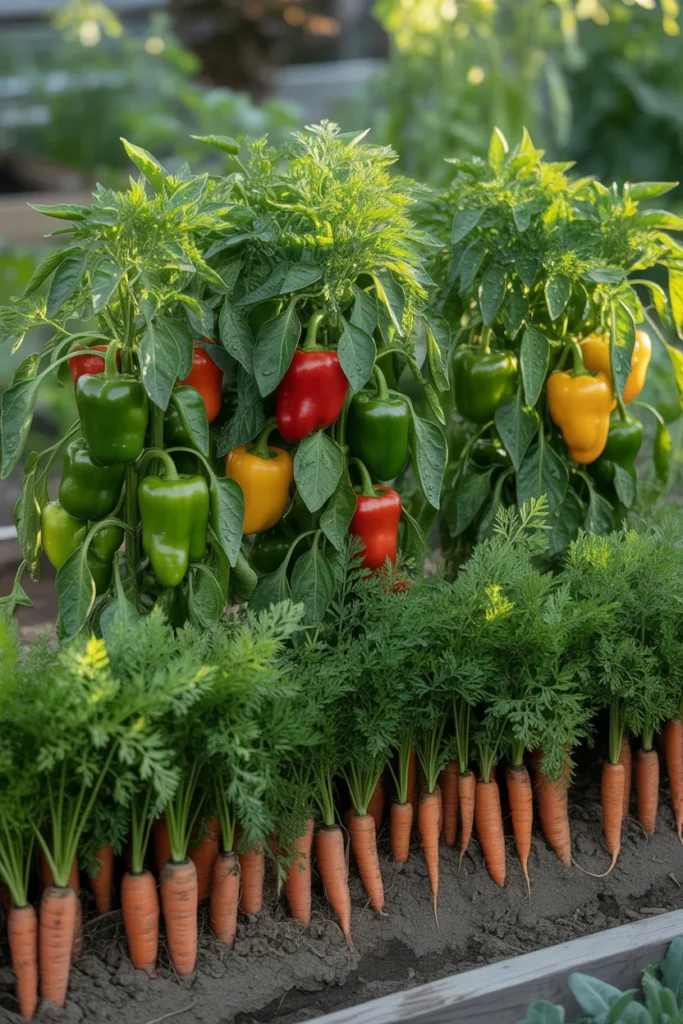
Carrots grow underground, while peppers grow above. That means they use space differently.
This makes them a smart pairing in small gardens.
Pro Tip: Sow carrots early near pepper rows.
8. Radishes
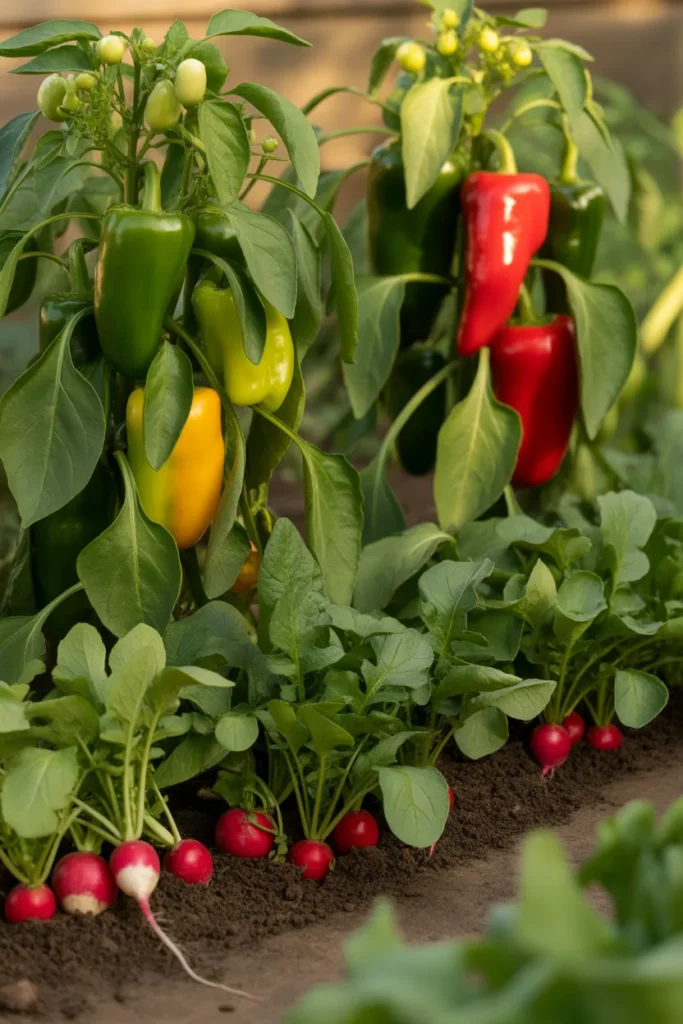
Radishes grow fast and are ready before peppers get large.
They help you harvest something quickly while peppers are still growing.
Pro Tip: Replant in gaps early in the season.
9. Lettuce
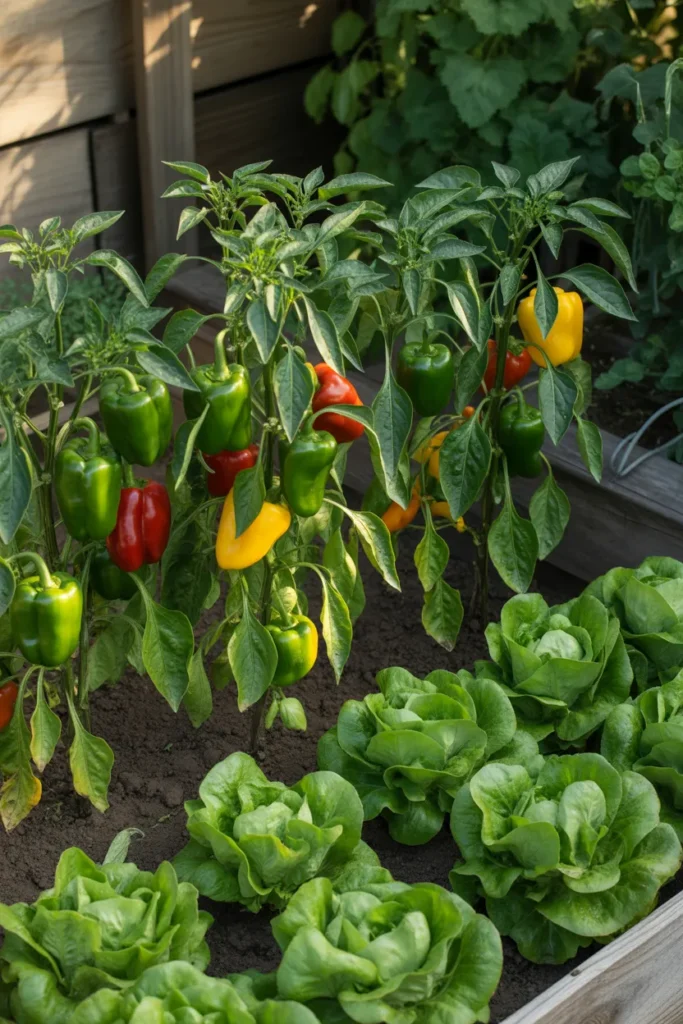
Lettuce enjoys a little shade in warm weather. Pepper plants can provide that later in the season.
This is a great way to maximise space.
Pro Tip: Harvest lettuce before summer heat peaks.
10. Spinach
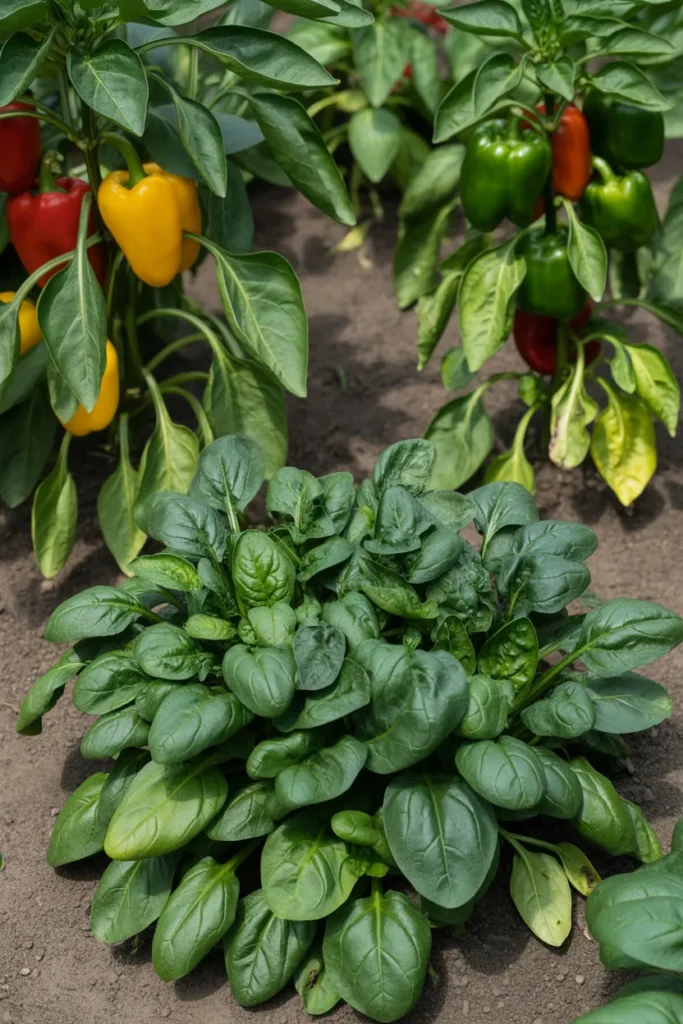
Spinach is another cool-season crop that works well early with peppers. It grows low and does not compete much for room.
Pro Tip: Plant in spring, then remove when the heat rises.
11. Beans
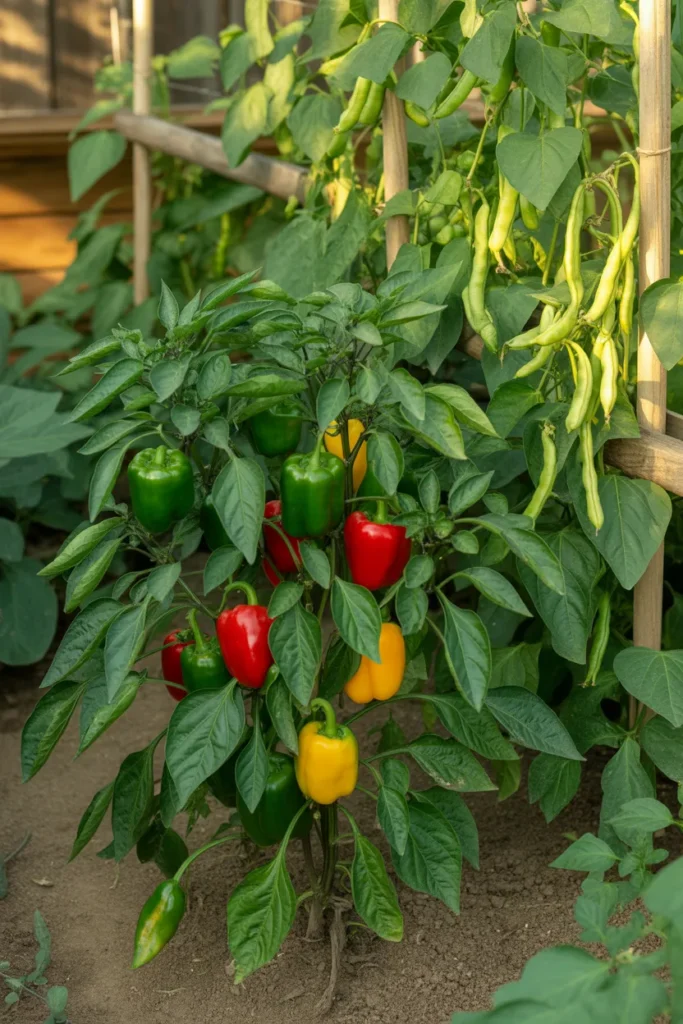
Beans can improve soil by adding nitrogen through their root partnership with bacteria.
Peppers need nitrogen for healthy growth.
Pro Tip: Keep climbing beans where they will not shade peppers.
12. Peas
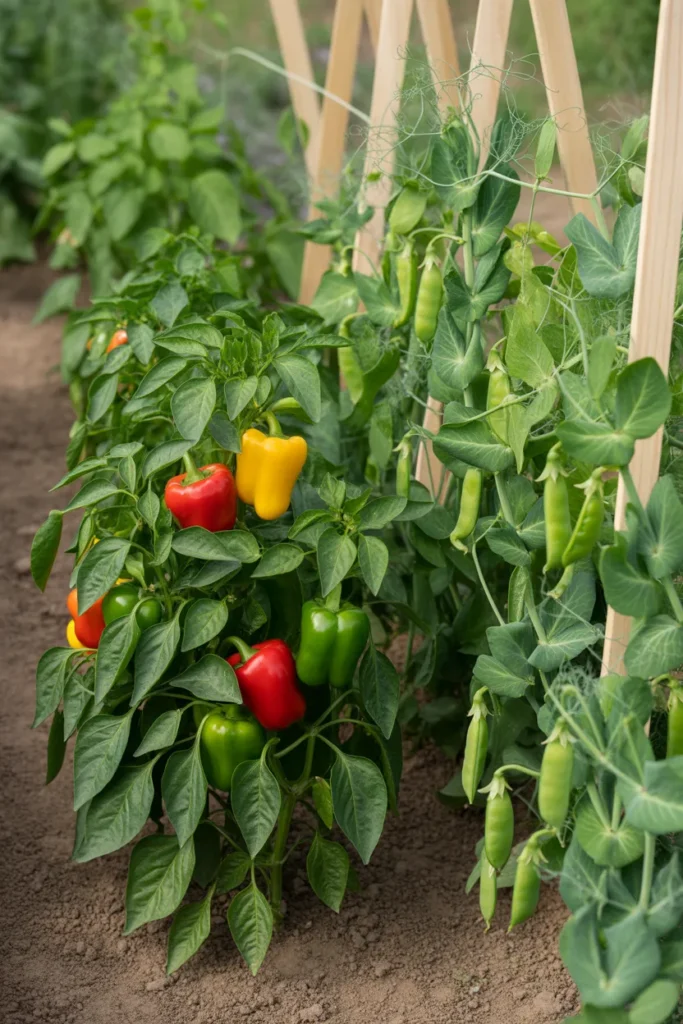
Peas can offer similar soil benefits as beans and are useful early in the season.
They are often finished before peppers need full space.
Pro Tip: Use a small trellis on the north side.
13. Sweet Alyssum
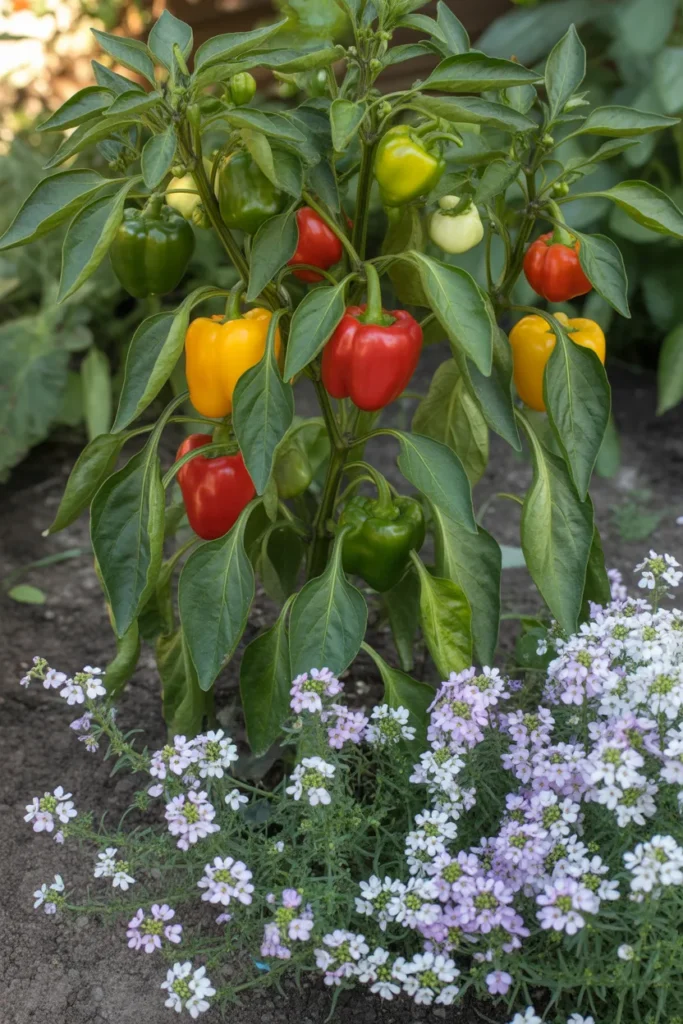
Sweet alyssum attracts helpful insects like hoverflies and tiny predators.
These insects can help with aphids and other pests.
Pro Tip: Plant near edges for a living flower border.
14. Cilantro
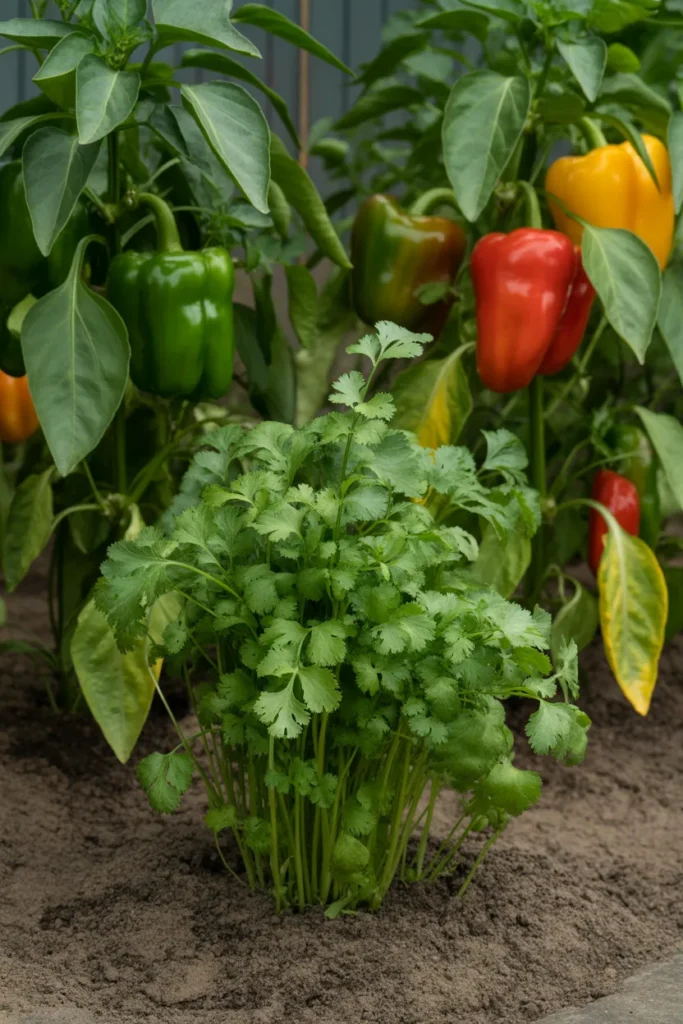
Cilantro can attract beneficial insects when it flowers.
It is also useful in the kitchen, which makes it a practical companion.
Pro Tip: Let some plants bolt for flowers.
15. Oregano
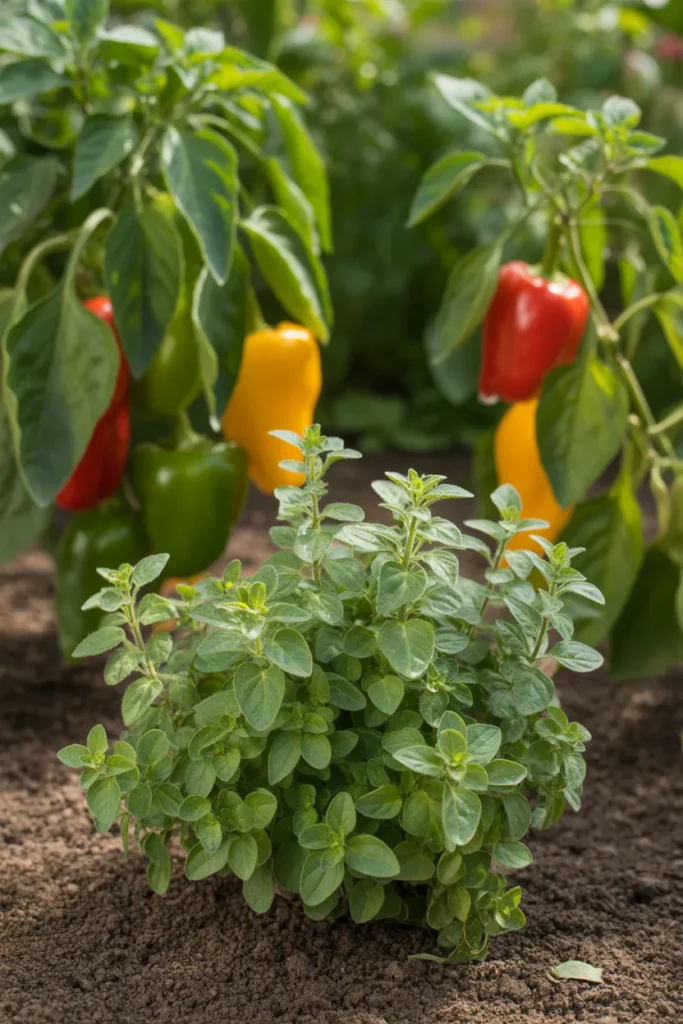
Oregano stays fairly low and can work as a useful herb companion.
It shares similar sunny growing conditions.
Pro Tip: Trim regularly so it does not spread too far.
Related: What Not to Plant With Bee Balm for Stronger Blooms and a Healthier Garden
What Not to Plant With Bell Peppers
Some sources recommend avoiding fennel, brassicas, and overcrowding with large, heavy feeders. Good spacing matters as much as plant choice.
Final Thoughts
Knowing what to plant with bell peppers can help you grow stronger plants and better harvests. The best companions reduce pests, improve soil, attract pollinators, and save space.
Start with one or two pairings like basil and marigolds. Small changes can bring big results.
FAQs About What to Plant With Bell Peppers
What grows best with bell peppers?
Basil, onions, garlic, marigolds, carrots, lettuce, and beans are some of the best companion plants for bell peppers.
Can tomatoes grow next to bell peppers?
They can, but both are in the same family and may share pests and diseases, so spacing and rotation matter.
Do marigolds help bell peppers?
Yes, marigolds can attract pollinators and beneficial insects while adding color to the garden.
What herbs grow well with bell peppers?
Basil, chives, cilantro, and oregano grow well with bell peppers.
How far apart should bell peppers be planted?
Most bell pepper plants do well with about 18 to 24 inches of space, depending on variety.
